Opening The Rift
therift
© 2026 The Rift. All Rights Reserved.
Dr. Kotnis Ki Amar Kahani: A Remake for Inspiration
A remake of ‘Dr. Kotnis Ki Amar Kahani’ can inspire doctors and public-spirited youth with its tale of courage and commitment.

Key Takeaways
1 of 3
Automatically generated. Read full article for complete context.
The recent successful BRICS summit as well as the preceding talks to resolve several contentious issues have helped to prepare conducive conditions for improving India-China relations. This is good news for both countries as well as for world peace.
This is a good time for initiating various goodwill improving steps and cultural exchanges that can strengthen people to people relations. This should include cooperation in film-making. Several well-made films from India have in the past received good audience response in China. In this context a more specific suggestion that can give very good results relates to possibilities of re-making an outstanding film of Hindi titled Dr. Kotnis Ki Amar KahaniDr. Kotnis Ki Amar KahaniLiterally ‘The Immortal Story of Dr. Kotnis’, this is the title of a 1946 Indian film based on the life of Dr. Dwarkanath Shantaram Kotnis. (Immortal Story of Dr. Kotnis). The real life story on which this film is made is full of highly dramatic and emotional moments as well as examples of great courage and commitment. This can be a very inspiring film for doctors and health personnel in particular but in addition also for all public spirited youth. Hence if the new version is very well-made, it is likely to have a durable viewership not just in India and China but all over the world.
FILMOGRAPHY COMPARISON
Dr. Kotnis Film Adaptations
1946
Original Hindi Film
Dr. Kotnis Ki Amar Kahani
1946
English Version
The Journey of Dr. Kotnis
Unknown
Chinese Film
Details Limited
VISUALS BY THE RIFT
This film was first made in 1946 in India. This was based on a short story by K.A. Abbas titled ‘One who did not come back’. The screenplay was also written by Abbas. This film was produced and directed by V. Shantaram who also played the lead role, while the female lead was played by Jayashree. An English version of the film was made with the title The Journey of Dr. Kotnis.
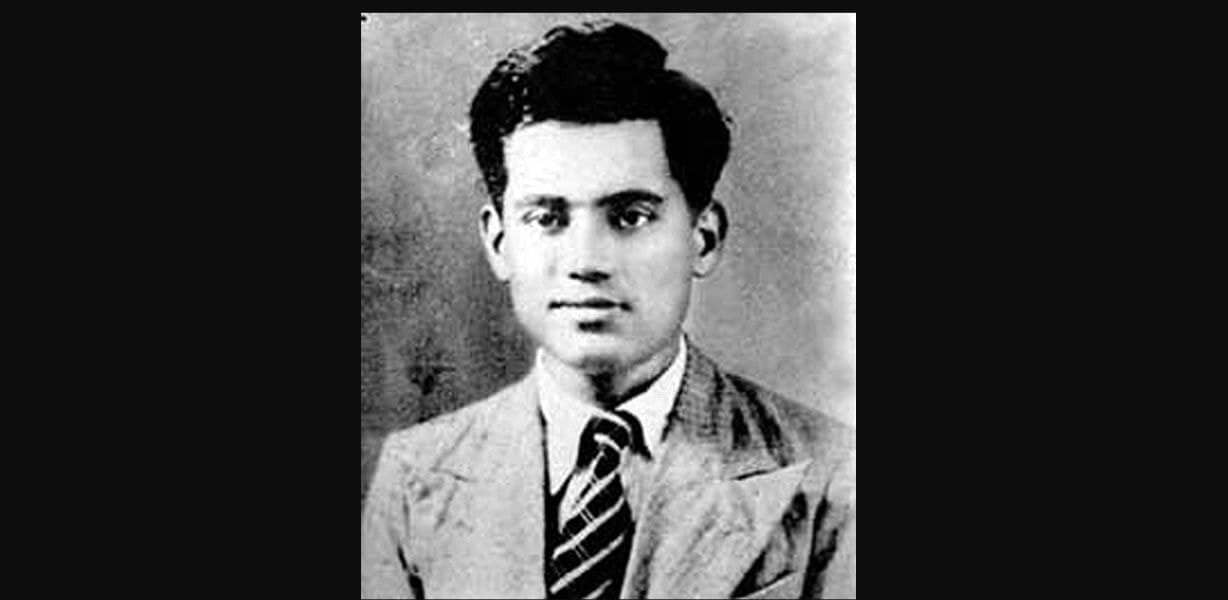
Dr. Dwarkanath Shantaram Kotnis was a very capable, dedicated and courageous doctor from Solapur, India who went to help the people of China at the time of the Second China-Japan war in 1938. A request from the Chinese had been received by Jawaharlal Nehru for medical help. Subhash Chandra Bose raised the resources for sending a medical team of five doctors. Dr. Kotnis became very deeply involved in this work. There are several accounts about him working so tirelessly that he forgot about his own health. At one time he is reported to have cared for patients non-stop for 72 hours. In a single battle he treated 800 soldiers. He became the director of the Dr. Bethune International Peace Hospital in China.
MEDICAL MISSION STATISTICS
Dr. Kotnis’s Tireless Service
72
Continuous Hours Caring for Patients
800
Soldiers Treated in a Single Battle
32
Age at Death
4
Years of Service in China
VISUALS BY THE RIFT
In the middle of all the struggles and work romance found the space to flower. Dr. Kotnis married a Chinese nurse Guo Qingin. They had a child.
During all this time, extending over about four years, Dr. Kotnis kept his family in India well-informed about his life in a new country through detailed letters. These letters focused on happier aspects, omitting news of the dangers and health problems he faced in his difficult and high-risk work.
Tragedy struck in 1942 when Dr. Kotnis died at the age of 32, a consequence of health problems stemming from his tireless and high-risk work. His contributions and sacrifice have been always remembered by the Chinese as well as in India. Chinese leaders visiting India generally try to meet family members of Dr. Kotnis. A memorial in his memory has been created in China where he is particularly remembered on Martyrs Day.
The film made in India by V. Shantaram on Dr. Kotnis is regarded as one of the gems of Indian cinema. This can still be seen on YouTube (Hindi version). A film on Dr. Kotnis was also made in China although not much is known about this.
Making a new film on Dr. Kotnis, independently by India or better still as a co-production of India and China, will be a very good idea in present day conditions. In addition other ways of taking forward the inspiring story of Dr. Kotnis can also be taken up, such as in the form of books. What is particularly inspiring about the medical mission of which Dr. Kotnis was a part is that this initiative was taken up by India when India was still struggling for its freedom but the leaders of the freedom movement demonstrated such broad vision and commitment that they found the time and resources to mobilize a medical team for China, and despite the difficult and dangerous conditions awaiting them in war-torn China, young doctors, including the 28-year-old Kotnis, willingly and courageously stepped forward to meet the challenge.
Disclaimer:The views and opinions expressed in this article are those of the author(s) and do not necessarily reflect the official policy or position of The Rift.