Opening The Rift
therift
© 2026 The Rift. All Rights Reserved.
OBC Creamy Layer Supreme Court Ruling: Dismantling Bureaucratic Discrimination in India
By ruling that parental income alone cannot exclude OBC candidates, the Supreme Court has corrected decades of hostile discrimination within India’s reservation framework.

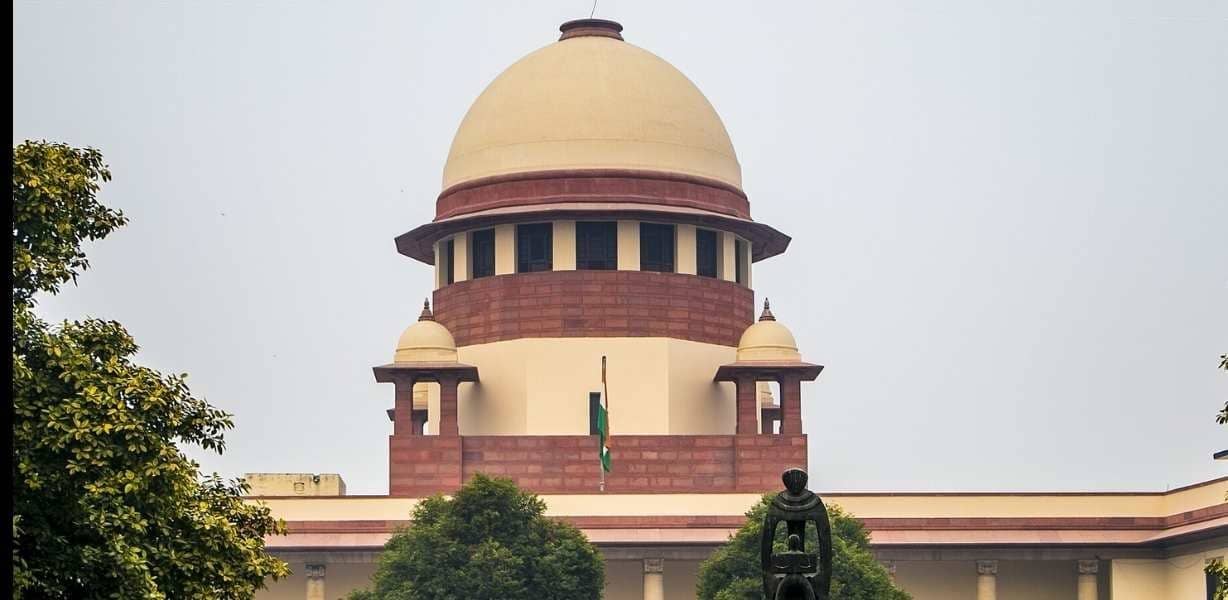
Source” Wikimedia Commons
Key Takeaways
1 of 3
“In a momentous OBC creamy layer Supreme Court judgment delivered in March 2026, the court ruled that parental income alone cannot be the sole criterion to determine the "creamy layer" among Other Backward Classes (OBCs).”
Automatically generated. Read full article for complete context.
For years, an insidious administrative technicality has systematically excluded thousands of marginalized individuals from the affirmative action they are constitutionally guaranteed. In a momentous OBC creamy layer Supreme Court judgment delivered in March 2026, the court ruled that parental income alone cannot be the sole criterion to determine the “creamy layer” among Other Backward Classes (OBCs). By forcing the government to rely on “status-based” metrics rather than purely income-based calculations, the Court has untangled an irrational bias against private sector and public sector (PSU) employees.
The conflict stems from the gross misapplication of the original 1993 Office Memorandum (OM). That foundational document explicitly stated that income from salaries and agricultural land should be excluded when determining the creamy layer boundary. For government officials, status is easily categorized—if parents do not hold Class A or Class B administrative positions, their children remain eligible, regardless of wage inflation or promotions.
The Flawed 2004 Letter
However, an obscure 2004 clarificatory letter deeply fractured this logic. It directed assessing authorities to fully include the salary income of PSU and private sector employees in their calculations. The result was a structurally absurd contradiction: the child of a low-ranking clerical worker in a PSU could be stripped of OBC benefits because their combined household income marginally crossed the current ₹8 lakh threshold, while the child of a higher status government bureaucrat—whose salary was expressly excluded—would remain eligible.
The Court accurately labeled this dynamic as hostile discrimination. By treating similarly situated individuals differently without any rational constitutional justification, the administrative state had weaponized inflation and private sector wage growth to gatekeep marginalized communities. Earning a livable wage in the private sector does not instantly erase generations of social and educational backwardness.
Expanding The Reservation Pool
By quashing the 2004 letter, the Supreme Court’s mandate will significantly expand the eligible pool of OBC individuals. The Centre has been directed to review the claims of candidates unfairly denied benefits within six months, demanding the creation of supernumerary posts if necessary.
This judgment is a profound reaffirmation of the spirit of Articles 14, 15, and 16. It ensures that affirmative action remains fundamentally an instrument of social justice—designed to counteract historical subjugation—rather than a poverty alleviation scheme manipulated by arbitrary salary ceilings. Social advancement is not merely a matter of a paycheck; it is a question of structural status.