Opening The Rift
therift
© 2026 The Rift. All Rights Reserved.
Who Owns Your Face? The Unfinished Battle for Personality Rights in India
When AI can clone your voice, sell your likeness, and put words in your mouth — the law needs to catch up fast.

Key Takeaways
1 of 3
Automatically generated. Read full article for complete context.
A salon in Bengaluru plastered Hrithik Roshan’s face across its hoarding. An e-commerce store in Delhi sold mugs bearing Abhishek Bachchan’s signature. A YouTube channel churned out videos of Asha Bhosle “singing” songs she never recorded — thanks to AI voice cloning. These are not hypotheticals, but the cases that wound up in Indian courts in 2024 and 2025. And they bring us back to the same urgent question: does Indian law protect your identity as your own?
What Are Personality Rights?
Personality rights give individuals some control over the commercial use of their name, image, voice, likeness, and/or signature. The two pillars of personality rights are the right to privacy, which protects private life from unwarranted intrusion, and the right to publicity, which prevents someone from commercially exploiting your identity without your consent.
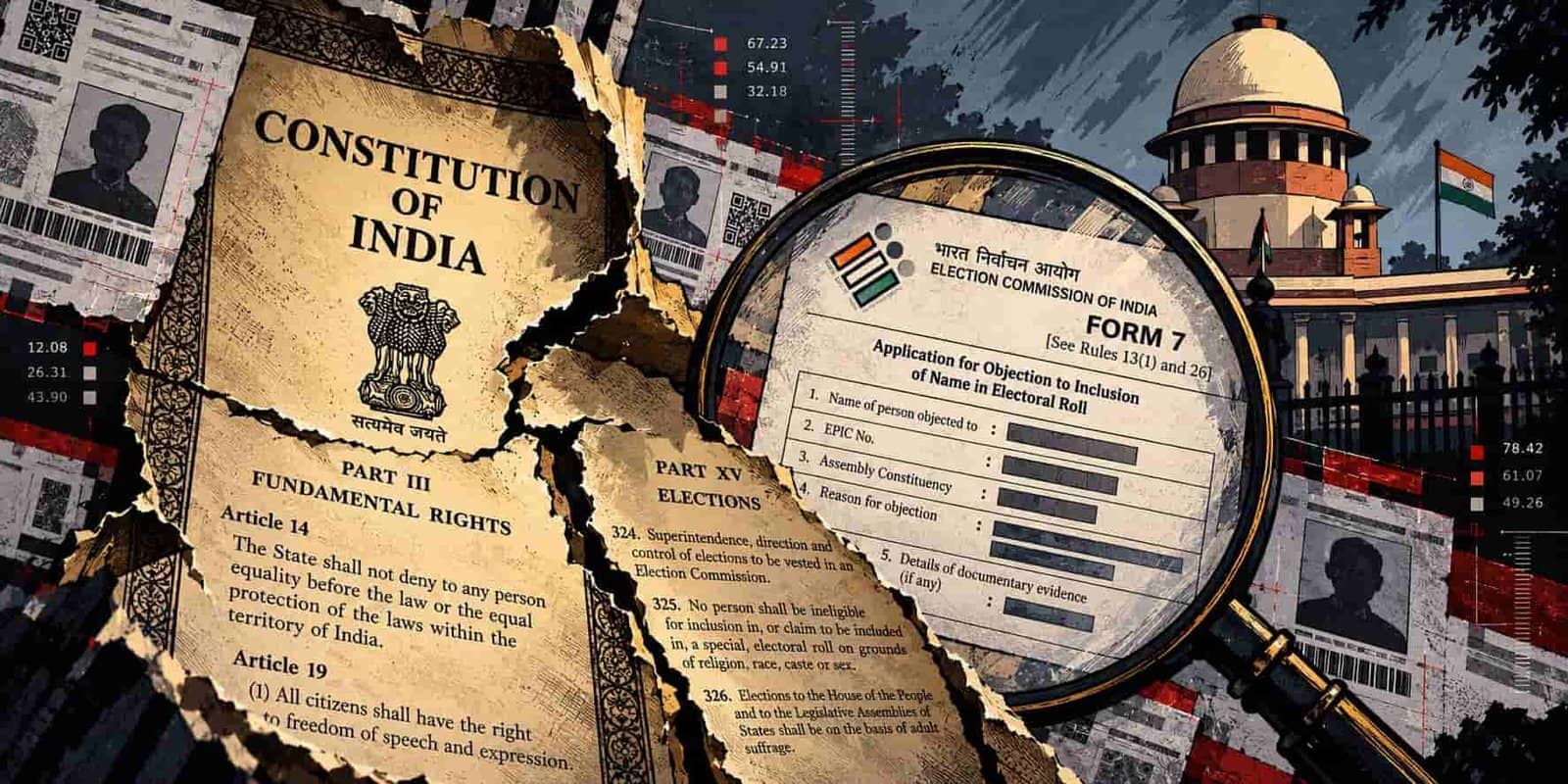
The right to privacy was enshrined by the Supreme Court in K.S. Puttaswamy v. Union of India (2017) as an inviolable part of the right guaranteed under Article 21Article 21The constitutional right to Protection of Life and Personal Liberty in India, which the Supreme Court has interpreted to include the Right to Privacy. of the Constitution. But when it comes to commercial exploitation or use of one’s identity, privacy doesn’t suffice. The right to publicity is what fills that void — but India has never codified it into a legislation.
In the R. Rajagopal v. State of T.N. 1994 (Auto ShankarThe Auto Shankar Case (1994)A gripping 1994 Supreme Court case where a convicted serial killer wrote an explosive death-row autobiography exposing corrupt police. When the state tried to ban it, the Court ruled in favor of press freedom, cementing modern boundaries of privacy.) case, an individual’s right to control commercial use of the value of his name was declared a facet of the right to privacy guaranteed by Article 21, resisting invasive and unwanted exploitation of personality — the right to be let alone.
The AI Crisis: When the Floodgates Opened
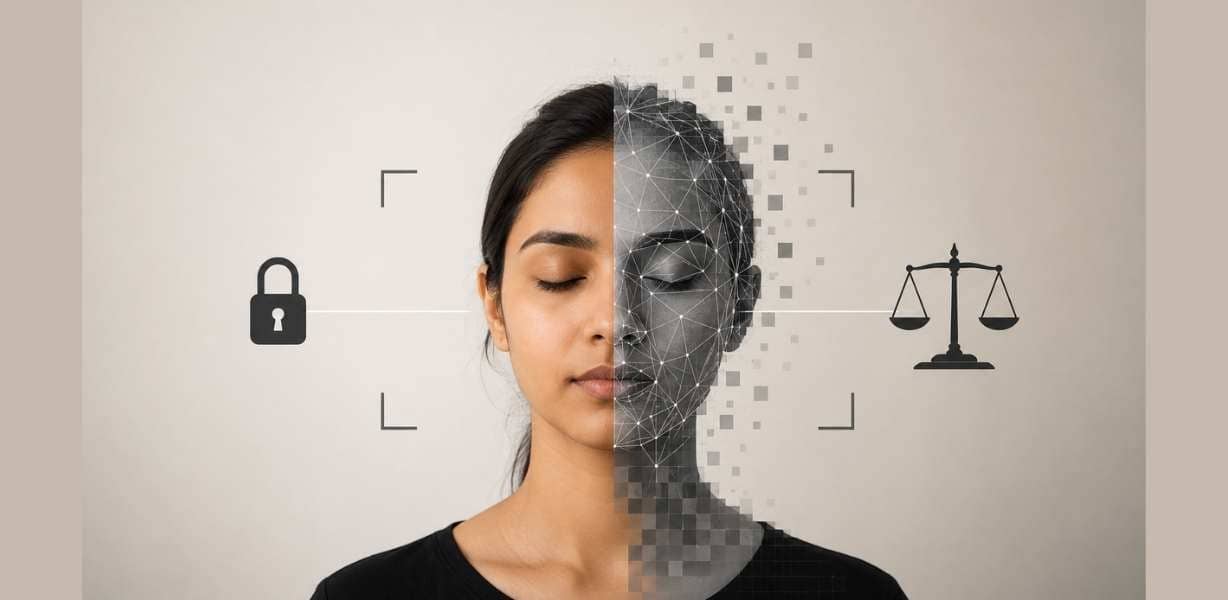
What turned personality rights from a niche IP issueIntellectual Property (IP)Creations of the mind, such as inventions, literary and artistic works, designs, symbols, names, and images used in commerce. into a mainstream legal crisis is generative artificial intelligenceGenerative AIArtificial intelligence systems capable of creating new text, images, video, or audio content based on user prompts and vast training data.. The rise of social media and generative AI changed the nature of misuse. DeepfakesDeepfakesHighly realistic synthetic media in which a person in an existing image or video is replaced with someone else’s likeness using AI., voice cloning and synthetic endorsements multiplied quickly, reaching millions within minutes.
In 2024 and 2025, India encountered an unparalleled flood of celebrity lawsuits. Enforcement of celebrity and personality rights has observed a prominent increase in India over the last decade, especially between the years 2022 and 2025 because of high-profile lawsuits and the rise of AI-powered circulation of identity.
Recent proceedings by Amitabh Bachchan, Aishwarya Rai Bachchan, Anil Kapoor, Jackie Shroff, and Asha Bhosle have resulted in a varied series of interim ordersInterim OrdersTemporary court directives issued to prevent immediate harm or maintain the status quo while the full legal case is still being decided. restraining the usage and circulation of their personality attributes across different platforms, including social media.
In Asha Bhosle v. Mayk Inc. (2025), legendary singer Asha Bhosle sued two U.S.-based AI companies and private e-commerce site owners for infringing her voice using AI voice cloning. The defendants created illicit voice models by altering her singing style and vocal techniques from her original recordings without consent. The perpetrators publicly distributed their voice models so that users could generate audio content in her voice and even exploit the voice models commercially through online marketplaces. The Bombay High Court held that voice cloning without consent infringes an individual’s personality rights.
In the Abhishek Bachchan case, the court decried that Bachchan’s persona (name, photographs, voice, and signature, etc.) was being exploited without consent because of AI-driven tools. For the first time, a court confronted the issues thrown up by AI, deepfakes, and digital impersonation in relation to reputation, dignity, and commercial goodwill.
The Doctrinal Mess Courts Have Created
Not all judicial reasoning in this space has been coherent. Critics argue that Indian courts have created a confused legal framework by applying privacy logic to what are essentially commercial disputes.
By extending privacy logic to commercial disputes, Indian courts may have turned personality rights into a doctrinal maze. Courts simply assume that if the celebrity is identifiable, the use must be unauthorised and therefore illegal. This dangerous confusion — the transplantation of consent-based logic of privacy onto the confusion-based logic of IPR — means that mere identifiability is equated with false endorsementFalse EndorsementWhen a person’s identity or likeness is used without permission to falsely imply they support, use, or are affiliated with a specific product or service..
What India Needs
India’s courts have done admirable work in a legislative vacuum. There is now an urgent societal and legal consensus for a codified framework dedicated to personality rights, which will offer greater certainty and deterrence and foster a more responsible, ethical and accountable digital ecosystem for all.
The solutions are not mysterious. A forward-looking statutory framework would ensure protection from unauthorized digital replicas of their likeness. Codify personality rights as a distinct legal right covering both commercial exploitation and dignity-based harm.
Disclaimer:The views and opinions expressed in this article are those of the author(s) and do not necessarily reflect the official policy or position of The Rift.