Opening The Rift
therift
© 2026 The Rift. All Rights Reserved.
Karnataka Lifts Ban on Hijab and other Religious Symbols, Justice or Politics?
Whether this survives the next election is an entirely different question, and one that the Supreme Court of India, by its silence, has made sure only politics can answer.

Key Takeaways
1 of 3
Automatically generated. Read full article for complete context.
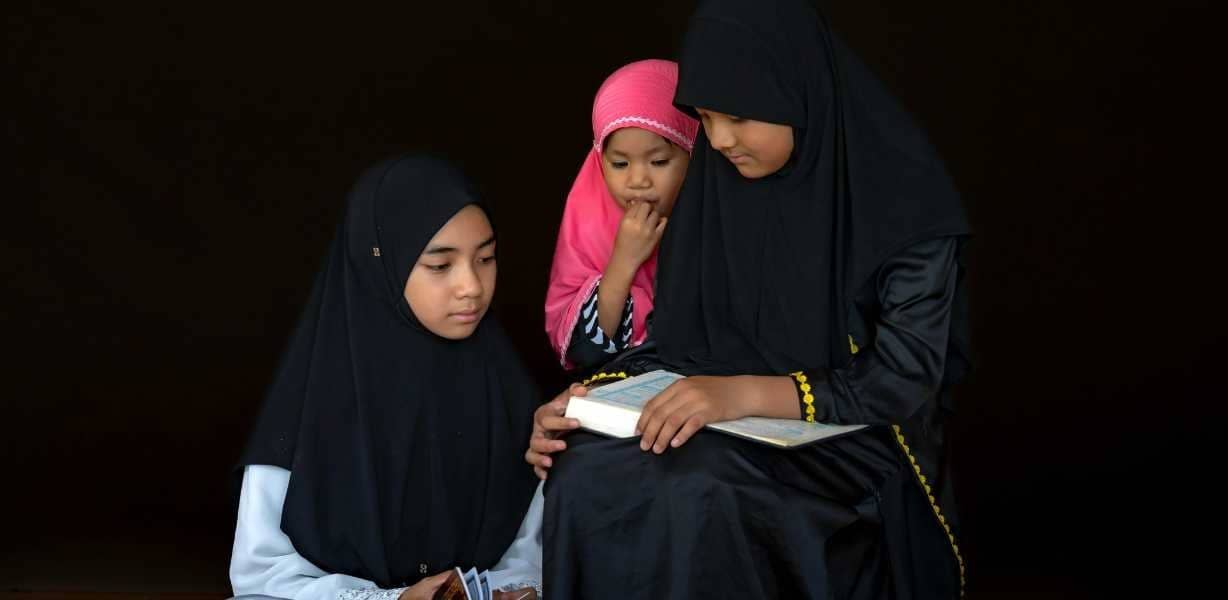
The Karnataka government on May 13, 2026, formally withdrew Government Order No. 14, the February 2022 directive that had effectively banned the hijab in schools and pre-university colleges across the state. The order, issued under the Karnataka Education Act, 1983, by the then-BJP government led by Chief Minister Basavaraj Bommai, had prohibited students from wearing any clothing that disturbs equality, integrity and public law and order. In practice, it meant one thing that Muslim girls who wore the hijab could not enter their own classrooms.
The new directive, issued by the Congress-led government under School Education Minister Madhu Bangarappa, replaces the ban with a policy of conditional accommodation. Students may now wear “limited traditional and practice-based symbols”—including the hijab, turban (peta), sacred thread (janivara), rudraksha, shivadhara, and sharavastra alongside the prescribed uniform. The conditions: symbols must not obstruct discipline, safety, cleanliness, or student identification. Faces must remain visible. No student may be denied entry to a classroom, institution, or examination hall for wearing a permitted symbol. The order is effective immediately.
Four years, one thousand dropouts, and a split Supreme Court verdict later, the Congress government in Karnataka quietly revokes the order that told Muslim girls their faith was incompatible with education.
This is a reversal. But it is not a restoration. You cannot undo four years of exclusion with a government circular.
And there is a question the Congress government has not answered: why did it take three years? The party won Karnataka in May 2023, campaigning explicitly on a promise to reverse the hijab ban. It then spent thirty-six months evaluating the legal implications and contemplating action, according to official statements.
What finally moved the file was not Muslim community pressure which had been consistent and ignored but a separate controversy on April 24, 2026, when a student’s sacred thread (janivara) was reportedly removed during a school examination, producing a political firestorm that cut across communal lines.
Minister Bangarappa confirmed as much stating that the government framed the new guidelines after discussions triggered by the April 24 incident, and that the decision was taken “keeping the welfare of children in mind.” The Congress government needed a crisis that affected Hindu sentiment to justify undoing a ban that had only ever affected Muslim girls. The symmetry is instructive: both parties, it turns out, act on religious symbols only when the electoral math demands it.
The timeline tells a story that no government circular can overwrite. Between February 2022 and May 2026, the Indian state—across three levels of government and two political parties—decided that a piece of cloth on a teenage girl’s head was a matter of sufficient constitutional gravity to justify a government order, a High Court bench, a Supreme Court hearing, and four years of legal limbo. The ban was not imposed during an emergency. It was imposed because a few college development committees in coastal Karnataka decided, unilaterally, that Muslim girls needed to choose between their faith and their education.
The Damage
The numbers are modest by the standards of Indian governance. A thousand students. A few hundred transfer certificates. A decline in enrolment in a single district. These are not the figures of a humanitarian catastrophe. They are the figures of a slow, bureaucratic cruelty—a form of state violence that doesn’t draw blood but quietly forecloses futures.
The PUCL’s 2023 report Closing the Gates to Education: Violations of Rights of Muslim Women Students in Karnataka,’ documented what statistics alone cannot. Students forced to choose between attending college without their hijab or not attending at all. Families pulling daughters out of government institutions and absorbing the cost of private schooling. Girls who simply stopped going. The report catalogued feelings of exclusion, harassment, and anxiety—bureaucratic language for the experience of being told, at sixteen or seventeen, that the state considers your religious practice a threat to public order.
The regional data is equally revealing. Udupi district, where the controversy began, saw a measurable decline in Muslim student enrolment in government PU colleges during 2022–23. Private and minority-run institutions, meanwhile, reported a corresponding increase. The ban didn’t eliminate hijab-wearing students from the education system. It privatized the cost of their exclusion. But perhaps the most insidious, unquantifiable fallout is the chilling effect on future generations. While we cannot know for sure without long-term data, it is highly likely that many parents will now default to enrolling their daughters exclusively in minority institutions to shield them from state scrutiny, or worse, stall their higher education altogether. The ban may not have just emptied classrooms today; it may have permanently redrawn the boundaries of where Muslim girls are permitted to exist tomorrow.
The Legal Black Hole
The most damning detail in this entire saga is not the ban itself, nor its belated reversal. It is the Supreme Court’s inaction. In October 2022, Justices Hemant Gupta and Sudhanshu Dhulia delivered a split verdict—Gupta upholding the ban, Dhulia striking it down as a violation of privacy, dignity, and the right to education. The case was referred to a larger bench to be constituted by the Chief Justice of India.
That bench, as of May 14, 2026, has never been constituted.
For three and a half years, the constitutional question raised by the hijab controversy whether the state can restrict religious expression in educational institutions, has sat in judicial limbo. The split verdict created a vacuum: the Karnataka High Court’s ruling stood as binding precedent within the state, the ban remained operative, and students had no appellate remedy. The Supreme Court’s referral was, in effect, a deferral, an institutional choice to not decide, which is itself a decision. It meant that the rights of Muslim women students in Karnataka were determined not by the Constitution but by whichever political party happened to hold power in Bengaluru.
But the judiciary’s failure runs deeper than delay. The entire Karnataka hijab case was adjudicated through the “essential religious practice” (ERP) doctrine, a framework under which Indian courts decide whether a practice is fundamental enough to a religion to deserve constitutional protection under Articles 25 and 26. The Karnataka High Court applied this test and concluded that the hijab is “not an essential religious practice” in Islam. The problem is not just the conclusion. It is the question. The ERP doctrine requires judges who are neither theologians nor religious scholars, to determine the theological core of a faith, effectively appointing themselves as arbiters of what a religion really requires. Legal scholars have criticised the test as arbitrary, inconsistent, and prone to homogenising diverse religious traditions into a single judicially approved version. The same doctrine has surfaced in the Sabarimala temple entry case, in disputes over Jallikattu, and in challenges to Sufi shrine practices, each time forcing the court to play amateur theologian. Whether the hijab is essential to Islam is, arguably, the wrong question. The right question is whether the state can compel a citizen to remove a sincerely held religious marker as a condition for accessing public education. The ERP framework avoids that question entirely.
What the Reversal Is and What It Isn’t?
The Congress government’s new directive is, on its face, a reasonable compromise. It doesn’t grant an unlimited right to religious expression in classrooms. It permits “limited” symbols, conditions them on institutional discipline, and applies the accommodation universally, covering Hindu, Muslim, Sikh, and Lingayat markers alike. The inclusion of the janivaraand rudraksha is no accident: earlier in 2026, a separate controversy erupted when students were asked to remove sacred threads during an examination. The directive addresses the political optics of both communities in a single order.
The approach is worth comparing to France, the only major democracy that has attempted a comparable ban. France’s 2004 law prohibiting “conspicuous religious symbols” in public schools is grounded in laïcité, a constitutional principle that mandates the total absence of religion from state institutions. India’s secular framework operates on the opposite premise: not the exclusion of all faiths but the equal accommodation of all. Karnataka’s new directive is, in that sense, more consistent with India’s constitutional architecture than the ban it replaces. But it is also an admission that the 2022 order imported a logic, uniformity as neutrality, religious expression as disruption that belongs to a different constitutional tradition entirely. France, at least, applies its ban consistently and legislatively. Karnataka imposed its version through an executive order, applied it selectively to one community, and has now reversed it through another executive order. The legal foundation, in either direction, is sand.
The reversal arrives four years late. It arrives after more than a thousand students have already been pushed out. It arrives without any accountability for the government that imposed the ban, the High Court bench that validated it, or the Supreme Court that let it fester. And it arrives as an executive order—one that a future government can revoke just as easily as this one issued it.
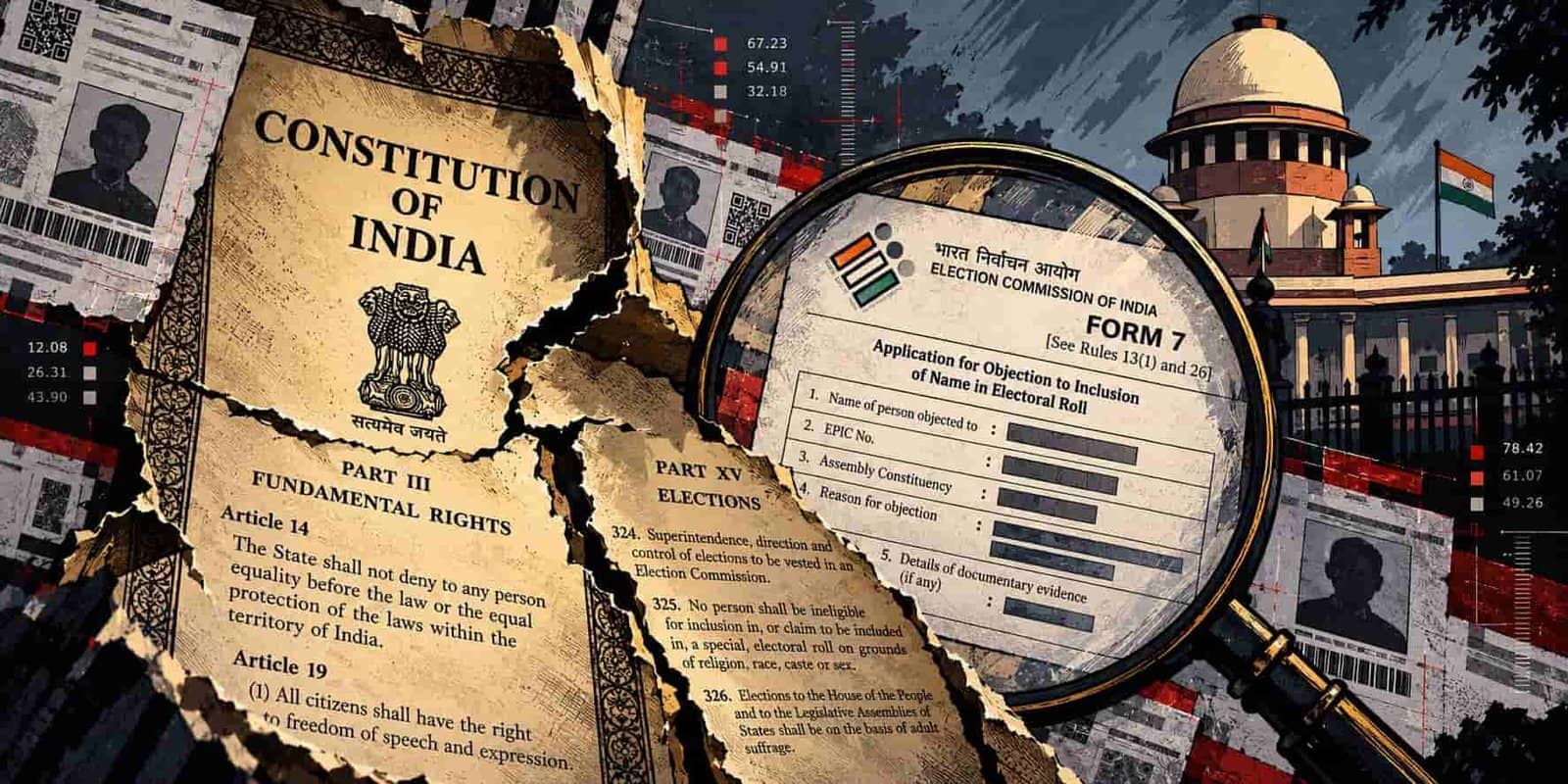
The fundamental question whether Article 19 and Article 25 of the Constitution protect the right to wear religious symbols in state-funded educational institutions remains unanswered. The Supreme Court has not spoken. The larger bench does not exist. What Karnataka has delivered is not a constitutional settlement. It is a political correction, contingent on the survival of the government that made it.
The girls who dropped out in 2022 are not coming back. No government order can give them those years. What it can do, what this one does, however inadequately is ensure that the next generation of Muslim students in Karnataka will not be forced to make the same impossible choice. Whether that assurance survives the next election is an entirely different question, and one that the Supreme Court of India, by its silence, has made sure only politics can answer.