Opening The Rift
therift
© 2026 The Rift. All Rights Reserved.
A Crisis of Accountability: When Acquittals Leave Justice Unanswered
The pattern of high-profile acquittals following long and difficult investigations raises serious questions about institutional capacity, investigative methods and prosecutorial effectiveness.

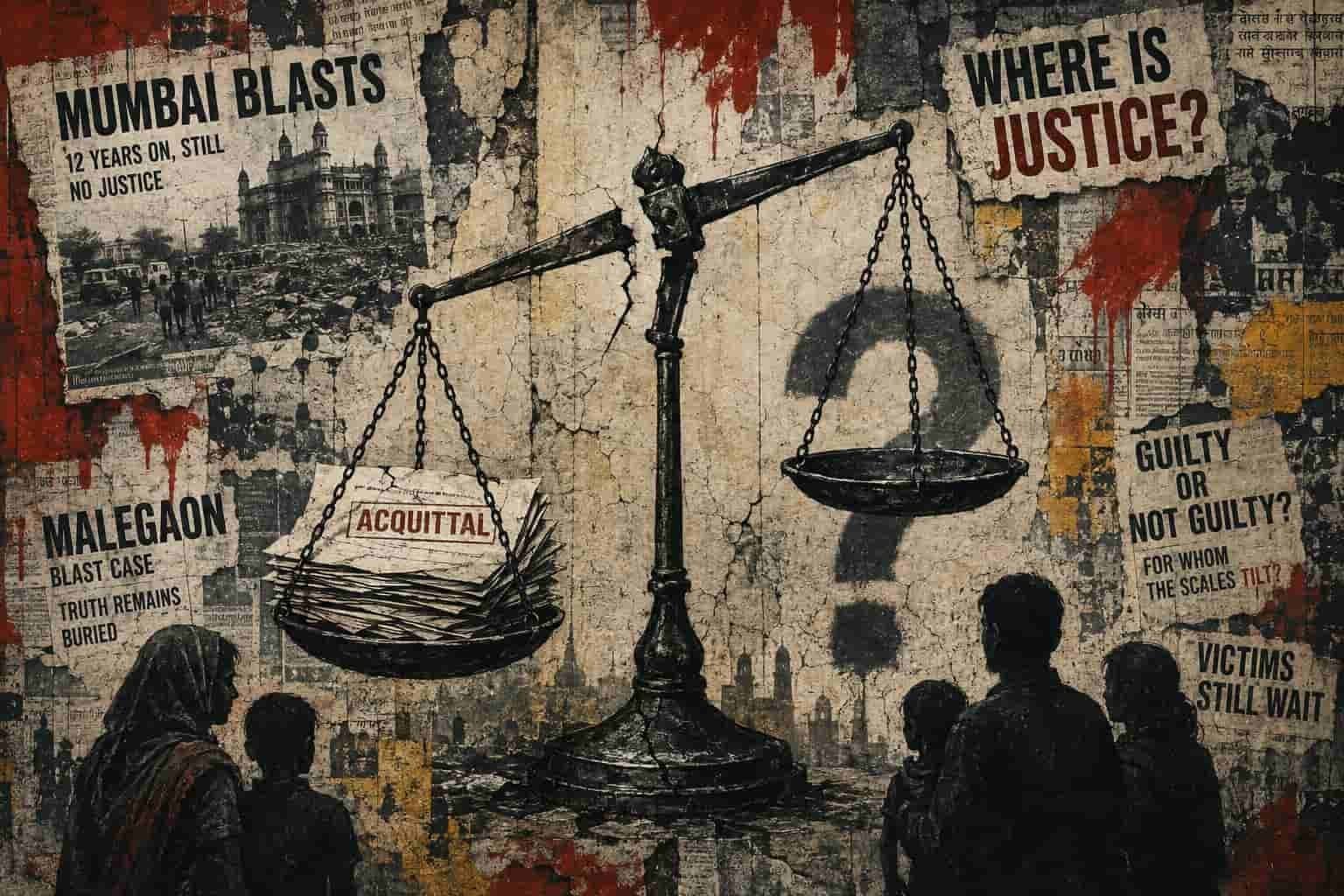
The justice system seeks to hold individuals accountable for their actions, but acquittals can leave many questions unanswered (Representative Image)
Key Takeaways
1 of 3
Automatically generated. Read full article for complete context.
India’s criminal justice systemLegal FrameworkThe system of practices and institutions of governments directed at upholding social control, deterring and mitigating crime, and sanctioning those who violate laws with criminal penalties and rehabilitation efforts. is founded on two equally important principles: an innocent person should not be punished, and those responsible for serious crimes must be brought to justice. When either of these principles fails, public confidence in the rule of law suffers.
In recent years, several high-profile acquittals in cases involving terrorism, mass violence and stringent criminal laws have raised serious questions about the quality of investigation and prosecution. The issue is not that courts acquit accused persons when the prosecution fails to prove their guilt beyond reasonable doubt. That is an essential safeguard of criminal justice. The larger concern is what happens after such an acquittal.
When a person spends years, and sometimes decades, facing prosecution and imprisonment, only to be acquitted because the evidence is found to be unreliable or legally insufficient, the acquittal may correct one injustice while leaving another question unanswered: Who actually committed the crime, and why did the investigating agency fail to establish it?
A Pattern That Cannot Be Ignored
Several prominent cases illustrate the consequences of prolonged criminal prosecutions which ultimately fail to secure convictions.
In the 2006 Mumbai train blasts case, the Bombay High Court reportedly acquitted all 12 persons who had been convicted by the trial court. The case concerned one of the most devastating attacks in Mumbai, in which approximately 180 people were killed. The High Court found serious weaknesses in the prosecution case, including concerns relating to witness testimony, identification procedures and confessional evidence.
The 2008 Malegaon blast case provides another example. After a trial that continued for nearly 17 years, the Special NIA Court reportedly acquitted all seven accused in 2025, including Sadhvi Pragya Singh Thakur and Lt. Col. Prasad Purohit. The court observed that although there may have been strong suspicion, suspicion by itself cannot take the place of legally admissible evidence sufficient to establish guilt beyond reasonable doubtStandard of ProofThe highest standard of proof required in most criminal cases, meaning that the evidence presented by the prosecution must be so convincing that there is no other logical explanation for the facts except that the defendant committed the crime..
The 1993 serial train blasts case also highlights the difficulty of securing convictions in old and complex criminal cases. Abdul Karim Tunda, accused of involvement in the blasts, was acquitted by the Ajmer TADA Court in 2024 for want of sufficient evidence, while two co-accused were sentenced to life imprisonment.
In the 2001 Gujarat SIMI/UAPA case, a Surat court reportedly acquitted 127 persons in 2021 after they had remained under the shadow of serious allegations for nearly two decades.
The prosecution of G.N. Saibaba provides another important example. Saibaba was convicted and sentenced to life imprisonment by the trial court, but the Bombay High Court subsequently acquitted him, and the acquittal was upheld by the Supreme Court. The higher courts found fundamental legal deficiencies in the prosecution case, including issues concerning the sanction required under the UAPA.
These cases are different in their facts and legal circumstances. They should not be treated as identical. However, collectively, they raise an important institutional question: Is our criminal justice system adequately equipped to investigate complex crimes and bring the real perpetrators to justice?
An Acquittal Is Not a Failure of Justice
There is an important distinction which must be kept in mind.
An acquittal does not mean that the court has failed. Where the prosecution is unable to establish guilt beyond reasonable doubt, acquittal is the correct legal consequence. The presumption of innocence and the high standard of proof are fundamental safeguards against wrongful conviction.
The problem arises when the acquittal becomes the end of the story.
If a prosecution fails because witnesses are unreliable, identification procedures are defective, evidence has not been properly collected or legal requirements have not been followed, there must also be an institutional examination of what went wrong.
The victims and their families deserve that answer.
When an accused person is acquitted after spending years in the criminal justice system, the immediate result may be relief for the accused. But the families of the victims are left with another painful question:
If these persons did not commit the crime, then who did?
That question cannot simply disappear with an acquittal.
The Need for Investigative Accountability
Investigating agencies exercise enormous powers. The police, the CBI, the NIA and other agencies have the power to arrest persons, conduct searches, collect evidence and initiate prosecutions. Such powers are necessary for maintaining law and order and dealing with serious offences.
But greater power must necessarily be accompanied by greater responsibility.
Where a court identifies serious deficiencies in an investigation, there should be a mechanism for examining what actually happened. Such an examination should, however, distinguish between an honest investigative error and deliberate misconduct.
There is a clear difference between an investigation which fails despite genuine efforts and one involving allegations of fabricated evidence, suppression of material evidence, coercion, malicious prosecution or gross negligence.
Every acquittal cannot and should not result in action against investigating officers. Criminal investigations, particularly in cases involving terrorism and organised crime, are often extremely difficult.
However, where a court points out serious and avoidable investigative failures, those failures should not simply disappear from the institutional record.
A proper accountability mechanism can serve two important purposes.
First, it can discourage investigative overreach and the tendency to arrest or prosecute persons merely because an agency is under pressure to show progress in a high-profile case.
Second, it can encourage investigating agencies to follow scientific, transparent and constitutionally compliant methods, thereby improving the chances of identifying and prosecuting the actual perpetrators.
The principles laid down by the Supreme Court regarding personal liberty and procedural safeguards, including in Satender Kumar Antil v. Central Bureau of Investigation, should be understood as part of this larger constitutional requirement.
The Victims Cannot Be Forgotten
There is another aspect which often gets lost in public debate: the rights and expectations of victims.
Whenever an acquittal takes place, the discussion generally focuses on whether the accused was wrongly prosecuted. That concern is entirely legitimate. But the families of the victims also have a right to know what happened and who was responsible.
An acquittal should therefore not automatically bring the search for the actual perpetrators to an end, wherever the law permits further investigation or other appropriate legal steps.
The issue should not be presented as accused versus victim.
A fair criminal justice system must protect both.
It must ensure that an innocent person is not punished while also making every lawful effort to identify, prosecute and bring the real perpetrators to justice.
A Parallel Question: Judicial Accountability
The question of accountability does not end with the investigating agencies.
There is also an increasing public discussion about judicial accountability, transparency and institutional trust. judicial independence is indispensable in a democracy. Judges must be able to decide cases independently and without fear of political pressure, public hostility or interference.
However, judicial independence should not mean that the judiciary is beyond all legitimate scrutiny.
Questions relating to administrative functioning, judicial delays, transparency, appointments, judicial ethics and institutional functioning are legitimate subjects of public discussion.
The reported interim order of the Delhi High Court in July 2026 concerning the treatment of certain judicial allowances for income-tax purposes is one such issue which has generated public discussion. The legal merits of the order must, of course, be examined on the basis of the actual judgment and applicable law. But controversies of this nature also show how quickly public perception can affect confidence in an institution.
Similarly, criticism of a judgment or judicial administration should not automatically be treated as an attack on judicial independence. At the same time, such criticism must remain responsible, fact-based, and within the bounds of law.
The objective should not be to weaken judicial independence, but rather to ensure it along with institutional accountability.
Independence and Accountability Must Go Together
The judiciary occupies a unique position in our constitutional system because it is entrusted with protecting fundamental rights and checking the misuse of state power.
For this reason, public confidence in the judiciary is particularly important.
Repeated adjournments, prolonged litigation and delays in deciding cases can impose enormous costs on ordinary litigants. In some cases, people wait for years for a final decision and, tragically, may not even live long enough to see the outcome.
These are not merely administrative problems. Delay can itself affect the quality of justice.
Judicial independence would actually become stronger if the institution is willing to examine legitimate questions concerning delay, administration and accountability.
An institution which is confident enough to examine its own functioning is more likely to command public respect than an institution perceived as unwilling to tolerate scrutiny.
From Acquittal to Institutional Learning
The criminal justice system should treat major acquittals as opportunities for institutional learning.
Where a court identifies serious weaknesses in an investigation, the concerned agency should examine the entire process: how evidence was collected, how witnesses were examined, how identification was conducted, how forensic material was handled, how statements were recorded and how the final prosecution case was prepared.
The objective should not merely be to find someone to blame. The larger objective should be to ensure that the same mistakes are not repeated.
A mature criminal justice system should be able to say not only:
“The accused has been acquitted.”
It should also be able to say:
“We understand why the prosecution failed, what went wrong and what steps will be taken to prevent such a failure in the future.”
That is how institutions learn and improve.
Justice Must Answer Both QuestionsIndia’s criminal justice system is at a critical juncture. The pattern of high-profile acquittals following long and difficult investigations raises serious questions about institutional capacity, investigative methods and prosecutorial effectiveness.
But the answer is not to weaken the presumption of innocence or lower the standard of proof.
Nor should investigating agencies be encouraged to secure convictions at any cost.
The answer lies in better investigation, stronger prosecution, scientific evidence, institutional transparency, and meaningful accountability where serious misconduct or negligence is established.
The same principle should apply, in an appropriate manner, to every constitutional institution, including the judiciary. Judicial independence must be protected, but independence should coexist with transparency, responsibility and legitimate public scrutiny.
Ultimately, justice is not a zero-sum game.
Protecting the innocent and finding the guilty are not competing objectives; they are two essential parts of the same promise of the rule of law.
When an accused person is acquitted after years of prosecution, the legal system may have corrected one wrong. But if the actual perpetrators remain unidentified, another question continues to haunt the victims and society:
If this person did not do it, then who did?
That question should not be ignored. It should become the starting point for institutional reform and a renewed commitment to ensuring that justice is not merely delivered in individual cases, but is also capable of finding the truth.
Disclaimer:The views and opinions expressed in this article are those of the author(s) and do not necessarily reflect the official policy or position of The Rift.