Opening The Rift
therift
© 2026 The Rift. All Rights Reserved.
Allahabad HC Mandates Speaking, Reasoned Orders for UP Judicial Officers Under BNSS, 2023
Allahabad HC Directs All Judicial Officers In UP Issuing Statewide Directions To Pass Speaking And Reasoned Orders While Exercising Jurisdiction Under Sections 173(4), 175(3) And 175(4) Of BNSS, 2023

Key Takeaways
1 of 3
Automatically generated. Read full article for complete context.
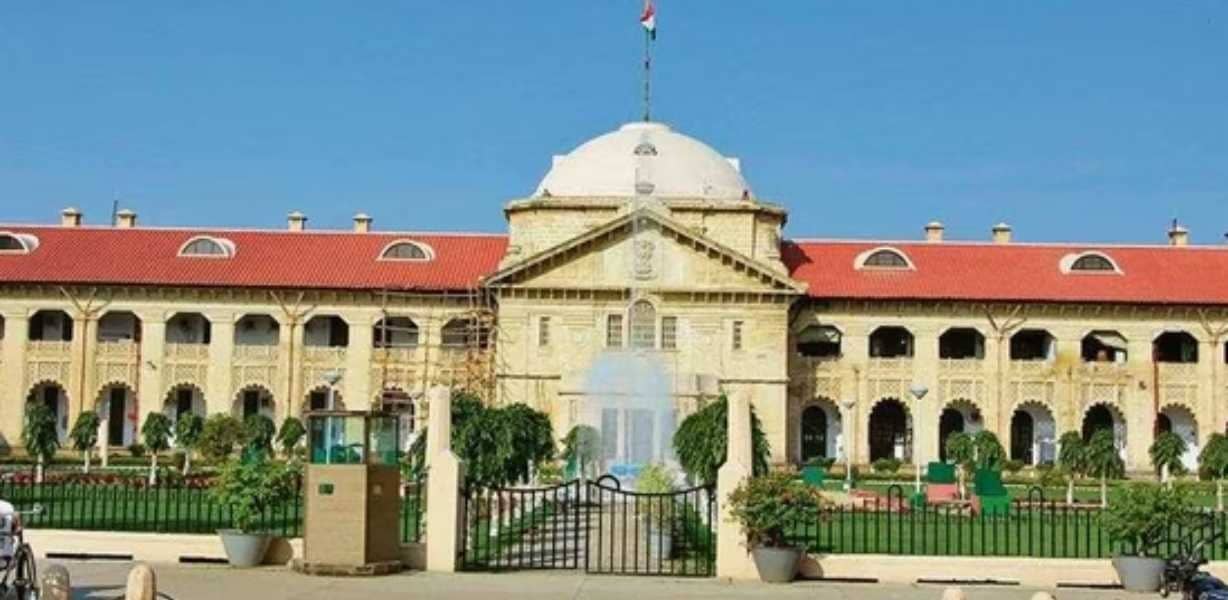
It is definitely entirely in the fitness of things that while taking the most pragmatic step, the Allahabad High Court in a most learned, laudable, landmark, logical and latest judgment titled Rakesh Kumar Yadav v. State of U.P. and 2 Others in Criminal Appeal No. – 8381 of 2026 and cited in Neutral Citation: 2026:AHC:211987 that was reserved on 29.09.2026 and then finally pronounced on 9.10.2026 has directed all judicial officers in UP exercising jurisdiction under Sections 173(4), 175(3) and 175(4) of the Bharatiya Nagarik Suraksha Sanhita, 2023 to pass speaking and reasoned orders while deciding applications seeking police investigation. It is worth paying singular attention that while issuing 11 most commendable statewide directions, the Allahabad High Court has explicitly mandated that the statutory power to order investigation must be exercised judicially rather than mechanically and set aside an order directing the registration of a case against police personnel. We need to note that the Allahabad High Court was hearing a criminal appeal that was against an order of a Special Judge under the Scheduled Castes and Scheduled Tribes (Prevention of Atrocities) Act, 1989, which had allowed an application under Section 173(4) BNSS and had directed the registration of a case against a Sub-Inspector, a Constable and other police personnel.
Before stating anything else, it must be stated what forms the “heart and soul” of this robust judgment that, “Most significantly, most remarkably and so also most commendably, the Bench encapsulates in para 46 what constitutes the cornerstone of this notable judgment postulating precisely that, “Directions for ensuring compliance with the procedural mandates by all the Judicial Officers in the State of Uttar Pradesh:-
(i) All the Judicial Officers exercising jurisdiction under Section 173(4) and 175 of the BNSS shall bear in mind that the words “after making such inquiry as he thinks necessary” occurring in Section 175(3) BNSS are a conscious and substantive statutory departure from the erstwhile Section 156(3) Cr.P.C. The object is not to conduct a ‘mini-trial’ at the stage of Section 175(3) BNSS, but to ensure that the statutory power of directing police investigation is exercised judicially and not mechanically.
(ii) The Judicial Officers shall consider the submission/report of the concerned police officer regarding the refusal or failure to register the FIR before passing an order under Section 173(4) and Section 175(3) BNSS.
(iii) Before exercising jurisdiction under Section 173(4)/175(3) BNSS, the Court shall verify that the applicant has followed the statutory course contemplated by Section 173 BNSS. The power under Section 175(3) BNSS is not intended to permit a complainant to introduce an entirely new factual foundation before the Magistrate after the police have declined to register the original information.
(iv) Section 175(4) BNSS is not an independent or standalone mechanism by which the safeguards contained in Section 175(3) BNSS can be bypassed. The sub-sections (3) and (4) must be read harmoniously and that an application against a public servant, where the allegation arises in the course of official duty, must also satisfy the procedural requirements applicable under Section 175(3) BNSS.
(v) Where, on a prima facie consideration of the complaint, the alleged act appears to have arisen in the course of discharge of official duties, the Magistrate and Special Courts shall follow the procedure contemplated by Section 175(4) BNSS.
(vi) Whenever Section 175(4) BNSS is attracted or is specifically relied upon, the judicial order shall contain a brief but clear finding as to whether the alleged act bears a reasonable nexus with the discharge of official duty. Such finding shall be based upon the material available before the Court, including the material gathered in the inquiry under Section 175(3) BNSS, the police report/submission and, where applicable, the report and assertions contemplated under Section 175(4) BNSS.
(vii) The Magistrates and Special Courts ‘shall exercise heightened judicial caution’ where the proposed accused is a public servant or police officer/police personnel, particularly in cases where the same police establishment or its officers:-
(a) had earlier registered or investigated a criminal case against the complainant or his/her family members;
(b) had arrested the complainant or members of his/her family;
(c) had taken preventive or coercive action against the complainant or his/her family;
(d) were involved in investigation of a criminal case or counter-case;
(e) had submitted a final report/closure report in a connected case; or
(f) were otherwise directly concerned with the occurrence or the earlier police proceedings.
In such circumstances, the Court shall carefully examine the chronology of events, the relevant General Diary entries, FIRs, criminal cases, arrest memos, police reports and other contemporaneous material placed before it. The existence of a prior police action or criminal cases shall neither by itself establish falsity of the complaint nor by itself establish its truth’; it is a relevant circumstance requiring judicial consideration.
(viii) The inquiry contemplated by Section 175(3) BNSS should be confined to what is necessary ‘for the proper exercise of judicial discretion’.
(ix) Every order passed on an application under section 173(4), Section 175(3) or Section 175(4) BNSS shall be a ‘speaking and reasoned judicial order’. It must demonstrate application of mind to the statutory requirements and should ordinarily indicate:
(a) whether the requirements of Section 173 BNSS have been complied with;
(b) whether the application is supported by the requisite affidavit;
(c) whether the police submission/report has been obtained and considered;
(d) whether an inquiry under Section 175(3) BNSS was considered necessary;
(e) if inquiry was conducted, the relevant result/material thereof;
(f) if no inquiry was considered necessary, brief reasons for such conclusion;
(g) whether Section 175(4) BNSS is attracted where a public servant is involved;
(h) whether the alleged act bears a reasonable nexus with official duty;
(i) whether the report of the superior officer and the assertions of the public servant, where required under Section 175(4) BNSS, have been considered; and
(j) the precise reasons for either directing investigation or declining the prayer.
(x) Where a report has been called for under Section 175(4)(a) BNSS but is not submitted within a reasonable period, the Magistrate/Special Court shall not be required to wait indefinitely. The Court may proceed in accordance with Section 175(3) BNSS, after taking into consideration the version of the accused public servant under Section 175(4)(b) BNSS, if available on record, in accordance with the law.
(xi) All Magistrates and Special Courts shall strictly follow the binding principles declared by the Supreme Court in Om Prakash Ambadkar and XXX (supra) while exercising jurisdiction under Section 173(4), 175(3) and Section 175(4) BNSS.”
For sake of clarity, the Bench clarifies in para 47 holding that, “These directions are issued not to restrict the legitimate right of an aggrieved person to seek investigation into a cognizable offence, nor to confer immunity upon any public servant, but to ensure that the power to direct investigation is exercised judicially, transparently, fairly and in accordance with the statutory safeguards deliberately incorporated in Section 174 & 175 BNSS and principles laid down by Hon’ble Supreme Court in this regard.”
At the very outset, this brief, brilliant, bold and balanced judgment authored by the Single Judge Bench comprising of Hon’ble Mr Justice Santosh Rai sets the ball in motion by first and foremost putting forth in para 2 that, The present criminal appeal has been filed by the appellant with a prayer to set aside the impugned order dated 11.8.2026 passed by Special Judge, Exclusive Special Court (SC/ST Act), Maharajganj in Misc. Application No.199 of 2026 (Sheela & Anr. vs. Rakesh Kumar Yadav & Ors.), under Section 173(4) BNSS, P.S.- Ghughuli, District- Maharajganj.”
To put things in perspective, the Bench envisages in para 3 stating that, “An application under Section 173(4) BNSS filed in the court of the Additional Sessions Judge/Special Judge (SC/ST Act), Maharajganj by opposite party no.2 Sheela wife of Pramod, and opposite party no.3 Anju wife of Rajesh, aged 29 and 26 years respectively, residents of Village Basantpur, Police Station Ghughuli, District Maharajganj. They stated that both belong to the Chamar caste, which is a Scheduled Caste category. A land and money dispute exists between the applicants’ family and Ramasare’s family. On the night of June 6, 2026, a clash occurred, injuring Rajesh and Pintoo. Later that night (around 10:00 PM – 11:00 PM), police took away Pintoo, Molai, Suresh, and Rahul. Around 1:00 AM – 2:00 AM, SI Rakesh Kumar Yadav, Constable Amit Kumar, and about 20 policemen (with no female police officers present) forced entry into the house of opposite party nos.2 and 3 without a search warrant. When objected to, they turned aggressive, committed obscenity, denied the women access to the bathroom, and outraged their modesty by making caste-based remarks targeting their Chamar identity. On June 10, 2026, while mud was being dumped at another house, threats were received via mobile number 7235815717, warning that they would face severe consequences this time. The opposite party nos.2 and 3 informed the Superintendent of Police, Maharajganj, on June 12, 2026, but received no response, compelling them to approach the court out of fear of being implicated in false cases. Thus, the accused persons Rakesh Kumar Yadav (Sub-Inspector), Amit Kumar (Constable), and about 20 other police personnel from Police Station Ghughuli, District Maharajganj have committed the offence under Sections 74, 351, 333 BNS and Section 3(1)(r), 3(1) (s) of the SC/ST Act.”
Briefly stated, the Bench enunciates in para 4 observing that, “In brief the grounds of appeal are that the impugned order dated 11.8.2026 has been passed mechanically, without proper consideration of the police inquiry report and the relevant provisions of the BNSS and SC/ST Act. The appellants were discharging their official duties in connection with maintenance of law and order pursuant to a local dispute and the proceedings are a counter-blast to the earlier cross-cases, namely Case Crime Nos.126 of 2026 and 127 of 2026, in which charge-sheets had already been submitted as I.O. It is further contended that the allegations of physical search, indecent behaviour and intimidation are vague, omnibus, uncorroborated and motivated, while the alleged occurrence took place inside a private residential premises and, therefore, the essential requirement of “public view” under the SC/ST Act is not prima facie satisfied. The appellants further contend that the learned court below failed to comply with the mandatory procedural safeguards under Sections 175(3) and 175(4) BNSS and that, in the facts of the case, the protection contemplated under Section 218 BNSS was also not duly considered. The entry upon the spot was made in the course of lawful preventive action pursuant to a PRV/112 call and the subsequent official telephone call was merely administrative in nature for the purposes of investigation. Thus, the impugned order and continuation of proceedings in Misc. Application No.199 of 2026 are alleged to be legally unsustainable and an abuse of the process of law.”
It cannot be glossed over that while citing the relevant case law, the Bench points out in para 44 that, “The approach adopted by the learned Special Judge is also inconsistent with the law declared by the Supreme Court in State of Haryana & Anr., Anil Kumar & Ors., Priyanka Srivastava & Anr., Ramdev Food Products Private Limited, Babu Venkatesh & Ors., Om Prakash Ambadkar, XXX (supra). Thus, in the above circumstances, the learned Special Judge, Special Court (SC/ST Act), Maharajganj was not justified in proceeding merely upon the allegations contained in the application under Section 173(4) BNSS as though they constituted conclusive material for directing criminal investigation. The Court was legally required to undertake the statutory exercise under Section 175(3) BNSS, including consideration of whether an inquiry was necessary and consideration of the submission/material furnished by the police officer. The absence of any finding on these aspects, despite the police report having been called for and despite the circumstances indicating contemporaneous police action, demonstrates that the specific statutory safeguards introduced by Section 175(3) & (4) BNSS were overlooked. The impugned order, therefore, suffers from a material non-application of mind and cannot be sustained in law.”
Most rationally and most forthrightly, the Bench resultantly propounds in para 48 holding that, “In view of the foregoing discussion, this Court is of the considered opinion that the learned Special Judge, SC/ST Act, Maharajganj, while passing the impugned order dated 11.08.2026, has failed to exercise the jurisdiction vested in him in accordance with the mandatory statutory provisions contained in Sections 175(3) and 175(4) BNSS. The learned Court has neither undertaken the requisite consideration as to whether an inquiry under Section 175(3) BNSS was necessary nor recorded ‘cogent reasons’ for dispensing with such inquiry. Further, in view of the allegations against police/public servants and the material disclosing the earlier police action and criminal cases involving the complainant’s family members, the applicability and requirements of Section 175(4) BNSS were required to be specifically considered. The impugned order, being ‘non-speaking and non-reasoned’ and suffering from material non-application of mind, cannot be sustained.”
Be it noted, the Bench notes in para 49 that, “Accordingly, the present appeal is allowed.”
It is worth noting that the Bench notes in para 50 that, “The impugned order dated 11.08.2026, passed by the learned Special Judge, SC/ST Act, Maharajganj, on the application under Section 173(4) BNSS, is hereby set aside. If any consequential proceedings arising solely out of the said order shall also stand quashed.”
It would be instructive to note that the Bench then hastens to add in para 51 noting that, “The District & Sessions Judge shall monitor compliance with the aforesaid directions in the monthly meetings of the judicial officers, while the District Monitoring Cell shall review the same in its monthly meetings with the officers of the district administration and ensure effective implementation.”
It would be also worthwhile to note that the Bench notes in para 52 that, “Let a copy of this judgment be forwarded to the Learned Registrar General, High Court of Judicature at Allahabad, for circulation amongst all the judicial officer in the State of Uttar Pradesh for strict compliance with the principles and guidelines contained herein.”
It also merits noting that the Bench notes in para 53 that, “Registrar General shall also forward a copy of this judgment to the Director, Judicial Training and Research Institute (JTRI), Lucknow for taking necessary steps for appropriate guidance for all Judicial Officers of the State.”
Finally, the Bench then concludes by directing and holding in para 54 that, “A copy of this judgment shall be forwarded to all District Magistrates, Senior Superintendent of Police/Superintendent of Police and Commissioners of Police in the State of Uttar Pradesh for information and necessary compliance.”
In a nutshell, we thus see that the Allahabad High Court has most brilliantly and most commendably directed all the judicial officers in the State of Uttar Pradesh issuing statewide directions to pass speaking and reasoned orders while exercising jurisdiction under Sections 173(4), 175(3) and 175(4) of BNSS, 2023. It stands to logic that these most laudable directions mandate courts to consider the response of police, determine whether an inquiry is necessary and examine the official-duty nexus where a complaint against a public servant concerns an act allegedly arising from official duty. No denying!
Disclaimer:The views and opinions expressed in this article are those of the author(s) and do not necessarily reflect the official policy or position of The Rift.
*Constitutional LawAllahabad High CourtBNSSCriminal ProcedureJudicial OrdersPolice InvestigationUttar Pradesh