Opening The Rift
therift
© 2026 The Rift. All Rights Reserved.
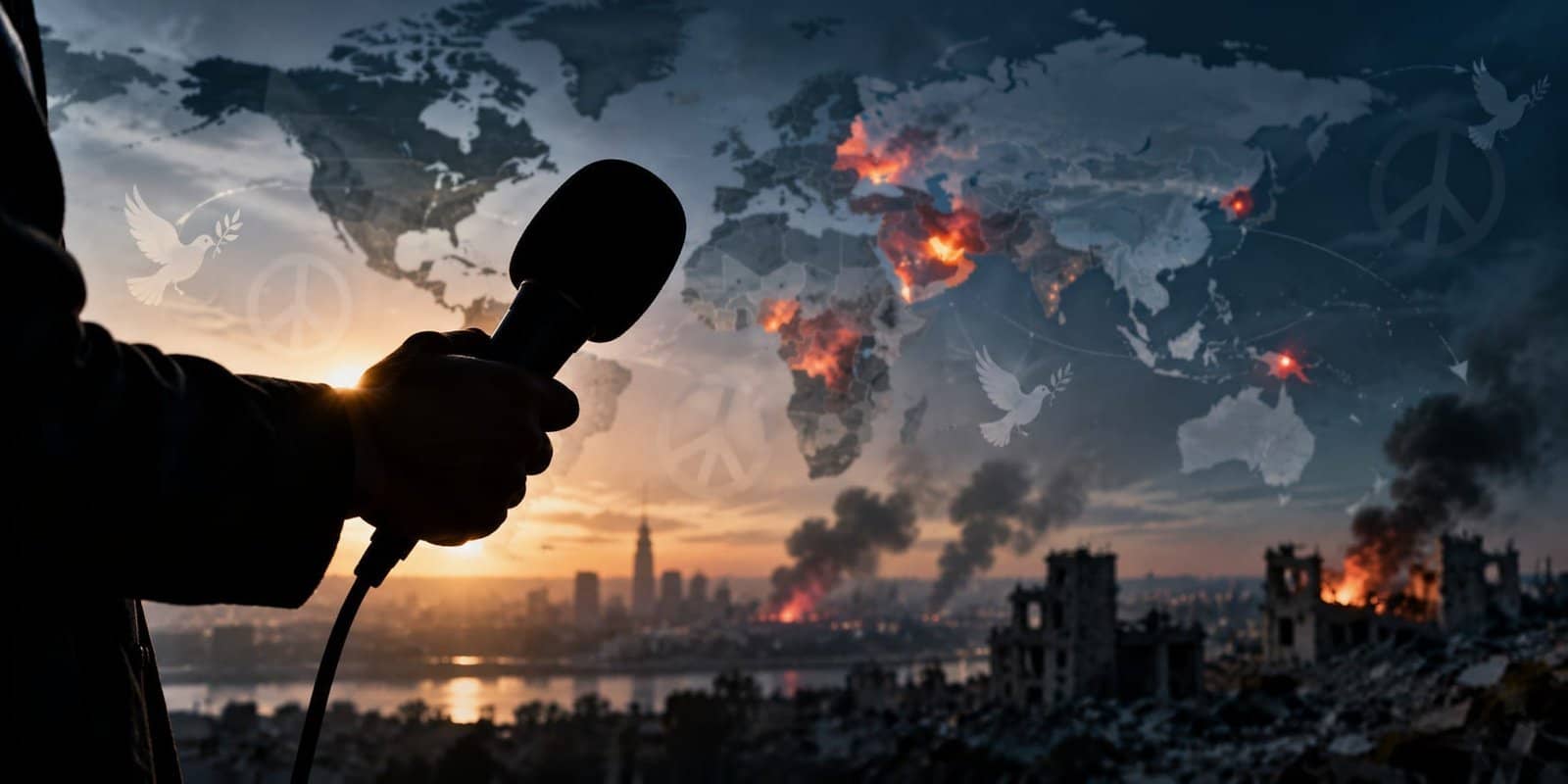
More than ever before now media needs discourse based on peace and nonviolence
Western media often fails to condemn unjustified aggression, focusing instead on aggressor’s dilemmas, thereby undermining the cause of peace and justice.

Key Takeaways
1 of 3
Automatically generated. Read full article for complete context.
There are frequent calls for peace in western media but a close examination would reveal that a broader and clearer commitment to peace and nonviolence is missing. This is as evident in the context of the Iran War today as it was in the context of Iraq and the Vietnam wars in earlier times.
The sudden first assault on Iran in February 2026 by the USA and Israel was so completely unjustified and shocking, in terms for example of the targeted killing of national and religious leadership, or the killing of a large number of girl students, or the very large scale of the attack and the number of targets, that it deserved to be condemned in the strongest terms. People needed to be told that, apart from the enormous damage and distress caused, this attack in the middle of ongoing negotiations was a very serious breach of trust and international law. As for the only significant issue raised by the attackers of nuclear weapons, people needed to be told that Iran had agreed much, much earlier to an agreement (JCPOA) for removing this danger, that it was found to be sincerely adhering to its terms, that this agreement for which diplomats of several countries had worked tirelessly broke down only because of the entirely arbitrary withdrawal from this led by Trump in his first Presidency, that despite this Iran was still willing to walk again in this direction, that negotiations for this were ongoing, that its supreme leader who was in fact killed in the initial 2026 US-Israeli attack had given a strong message against acquiring nuclear weapons. These most important aspects of the entirely unjustified and completely illegal attack did not get the prominence these deserved in the most influential western media with the highest reach to people. If these facts had received the highest attention these deserved, the pressures for early peace with compensatory actions would have been much greater and would have gained much higher acceptance among the people of the USA.
As the war did not go according to the plans and expectations of the attackers, and there are many problems in which the USA authorities are caught, now there is much higher questioning of the war. However even now more often the war is questioned because of the problems and dilemmas it has posed to the USA authorities and ruling party politicians than to the enormous distress this has caused in Iran, Lebanon and elsewhere. Even now the problems of attackers is the main issue, not the distress of the victims. Even now several of those who constitute in relative terms the voice of peace in the USA speak more often mainly in terms of the problems with which the USA or some of its ruling elites are faced when they criticize the war, not to the same extent the distress of those attacked, which from a peace perspective should be the main issue.
Assume for a moment a different possibility in which a nation attacked in such a big way had surrendered, agreeing to numerous unjust demands including those related to oil and gas resources. Would the US media then discuss this attack as a ‘success’ or as a ‘failure’? The chances are that Trump would have gone around boasting of his big success and a substantial section of media would have happily gone along with that narrative, just as it has with the USA getting increasing control over the oil resources of Venezuela, after having kidnapped its president and the first lady.
The Iran war is just one example of the absence of a peace and justice based response in western media. It is the same story for Vietnam, Afghanistan, Iraq, Libya, numerous regime change operations and assassinations, the ever continuing War on Terror and the even longer duration War on Drugs. If the more influential sections of the media had fulfilled their duty of covering these more truthfully, then the cause of peace would have been better served and numerous highly unjust wars and aggressions could have been brought to an earlier end or in many cases avoided altogether, saving millions of precious human lives.
Of course the need for media reform exists everywhere and certainly state-controlled media in several authoritarian countries outside the Western world have also acted in highly unfair and irresponsible ways. The exceptionally courageous and thoughtful reporting that helps the cause of peace and still exists on a small scale in some Western countries may also be less visible there. In a different context for various petty gains media in several countries have also been influenced heavily by big business interests or various corruptions, including collaboration in regime change operations. All of this remains significant for various countries, but in the present context of the bigger dangers the world faces today, perhaps the biggest benefits can result if the western media (as also media everywhere) can become a sincere, strong and sustained voice for peace and nonviolence. The world needs its media today to speak more consistently for creating a wider paradigm in which solutions based on peace with justice have a significantly higher chance and where the practice and understanding of nonviolence based changes in society can get much higher support. On the one hand, there can be a continuing dialogue with big media for this, and on the other hand, it is important to extend more support to smaller media efforts that are already known for their commitment to peace, nonviolence and justice. The military industrial complex supports war mongering in several ways, but on the other hand the support for the true voices of peace is still very inadequate and probably reducing further, as those on this path are known to be experiencing increasing problems, with some of them sending messages that even survival is becoming more and more difficult. This is a situation that must change, and there should be increasing support with honor for the true voices in media for peace, nonviolence, justice and protection of the environment, as well as increasing unity among them.
Disclaimer:The views and opinions expressed in this article are those of the author(s) and do not necessarily reflect the official policy or position of The Rift.
*Media BiasGeopoliticsInternational RelationsIran Nuclear DealNonviolencePeace JournalismUS Foreign Policy