Opening The Rift
therift
© 2026 The Rift. All Rights Reserved.
Electoral Transparency and the Right to Protest: Upholding India’s Democratic Mandate
Citizens Movements are calling for an independent, transparent and impartial review of substantiated concerns relating to electoral administration, voter-roll integrity, and counting procedures.


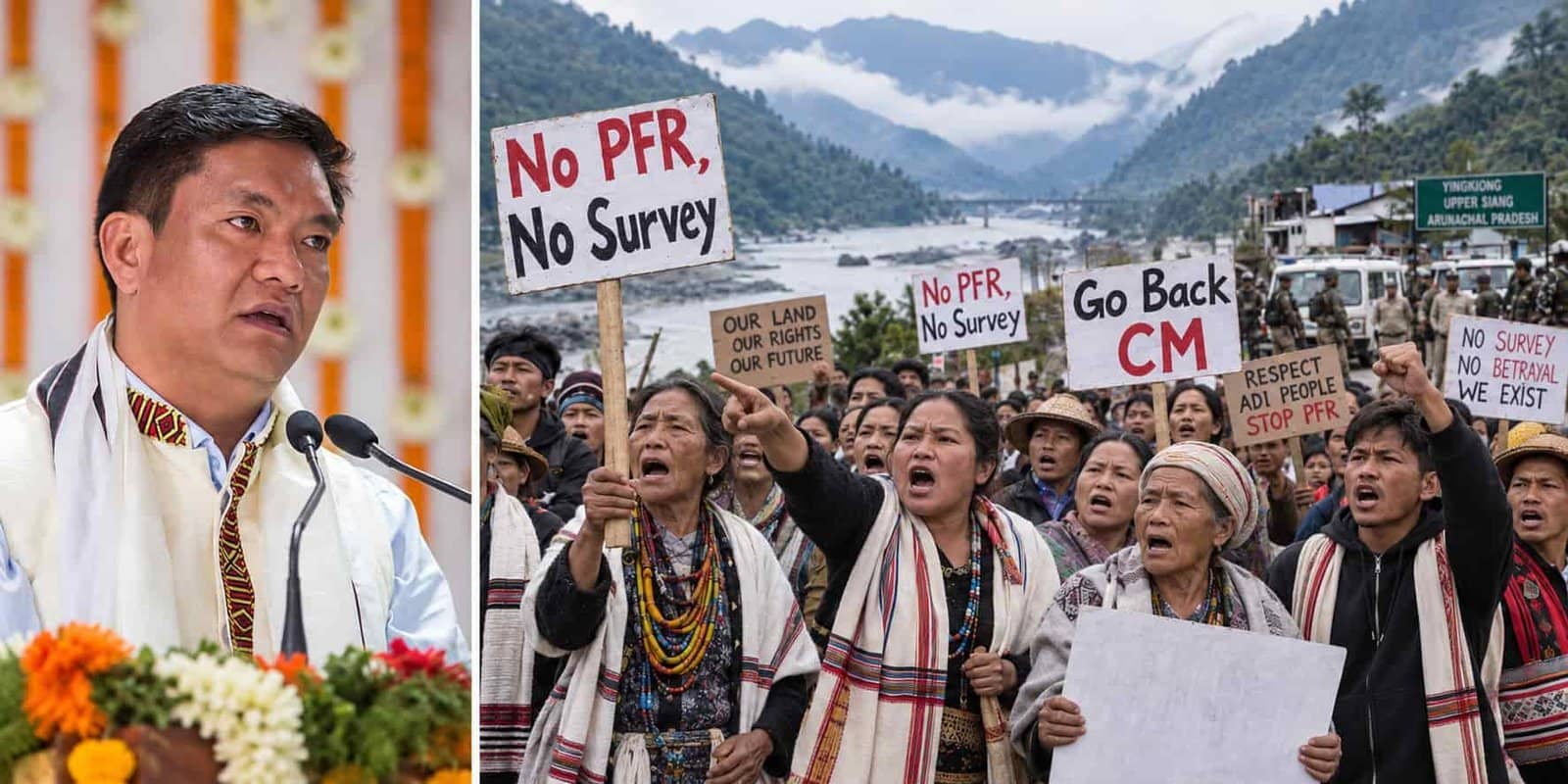
Citizens gather in India to protest, demanding electoral transparency and upholding democratic rights. (Representative Image)
Key Takeaways
1 of 3
Automatically generated. Read full article for complete context.
The credibility of India’s democratic mandate must never be beyond scrutiny. In a constitutional democracy, public confidence in elections rests not merely on the declaration of results, but on transparent procedures, verifiable records, impartial oversight and effective remedies for proven violations.
Serious questions and allegations concerning the 2024 Lok Sabha elections and subsequent elections conducted under the current Chief Election Commissioner warrant careful, evidence-based examination wherever credible material justifies further scrutiny. Allegations must neither be dismissed without examination nor treated as established facts without proof.
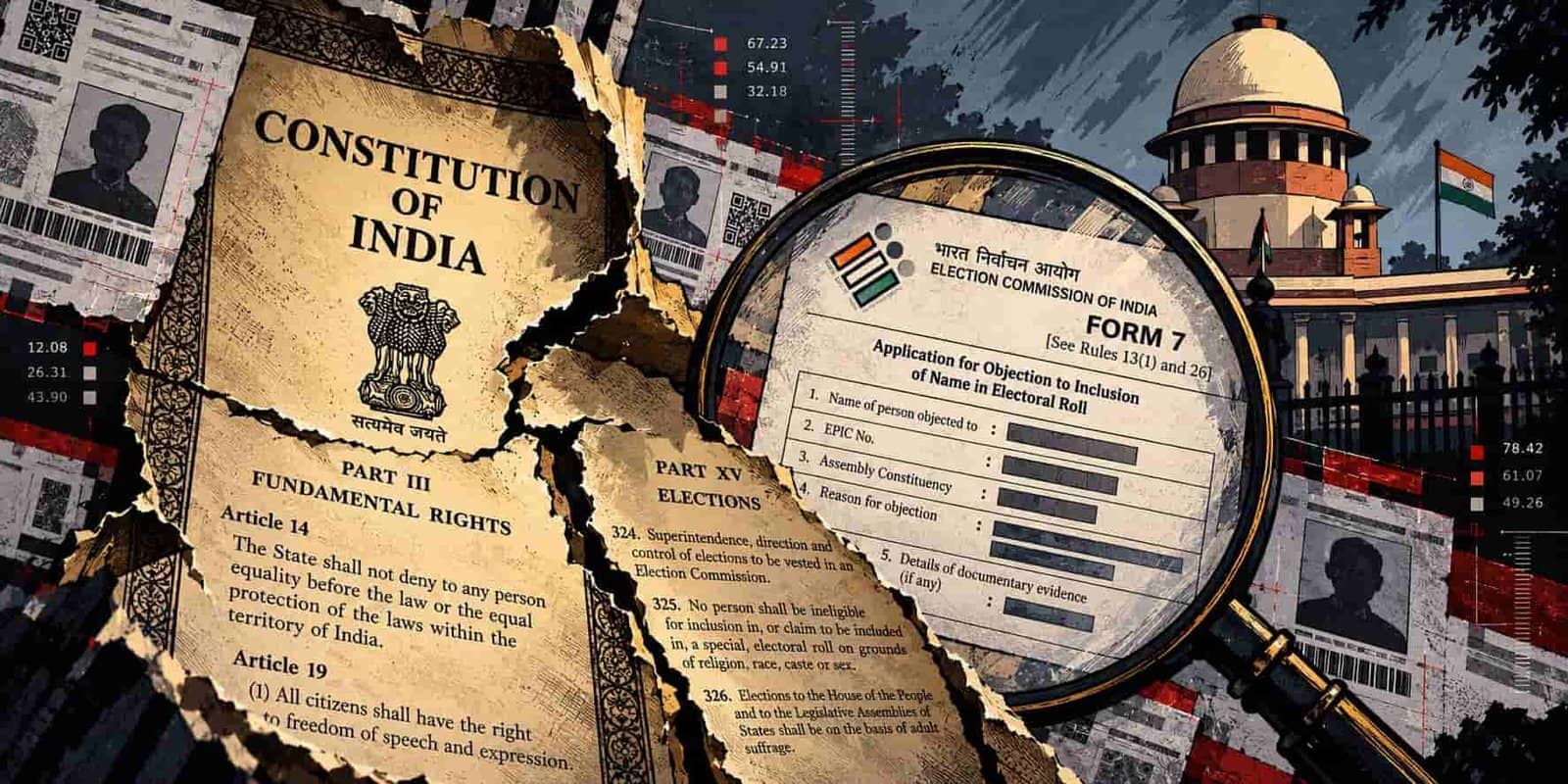
Citizens Movements are calling for an independent, transparent and impartial review of substantiated concerns relating to electoral administration, voter-roll integrity, polling-station records, turnout figures, counting procedures and the institutional independence of election oversight. Such a review should include:
KEY COMPONENTS OF ELECTORAL REVIEW
Essential Elements for a Transparent Electoral Review
Access to Records
Polling Station Docs
Statutory Forms, Digital Records
Data Reconciliation
Vote Totals
Turnout, Postal Ballots
Voter Roll Integrity
Additions/Deletions
Safeguards Against Errors
Independent Investigation
Evidence-Based Allegations
Published Findings
VISUALS BY THE RIFT
Access to Electoral Records: Appropriate access to polling-station documentation, statutory forms, counting records and relevant digital records, subject to lawful safeguards and the protection of voters’ privacy.
Reconciliation of Electoral Data: A documented comparison of votes recorded at polling stations, reported turnout figures, postal ballots and final counting totals, with discrepancies explained and independently verified.
Voter-Roll Integrity: Transparent examination of additions, deletions, corrections and other material changes to electoral rolls, with safeguards against wrongful exclusion and unlawful duplication.
Independent Investigation: Impartial investigation of specific, evidence-supported allegations, with findings published to the fullest extent permitted by law.
Accountability and Remedies: Effective action by competent authorities and courts wherever violations are established, including corrective measures, fresh polling or the setting aside of an election where legally warranted.
The call is for stronger safeguards to protect the independence, impartiality and institutional credibility of the Election Commission of India, together with transparent procedures for addressing complaints and making relevant electoral information accessible to citizens.
If credible evidence establishes systemic failures serious enough to undermine confidence in the national electoral mandate, all constitutionally available options for restoring public confidence should be examined openly by the competent institutions. This must include a reasoned assessment of whether a renewed electoral mandate is legally and constitutionally available and appropriate. Any such measure must follow the Constitution and the rule of law.
This is not a demand to predetermine the outcome of an investigation. It is a demand that legitimate questions be answered through evidence, independent scrutiny and due process.
The constitutional right to protest: A Democracy Must Allow Its Citizens to Be Heard
CONSTITUTIONAL GUARANTEES
Freedoms Under Article 19
19(1)(a)
Freedom of Speech & Expression
19(1)(b)
Right to Assemble Peaceably
VISUALS BY THE RIFT
India’s Constitution guarantees the freedoms of speech and expression and the right to assemble peacefully and without arms under Articles 19(1)(a) and 19(1)(b). These freedoms are essential for democratic accountability. They enable citizens to question public authorities, challenge injustice, demand transparency and express their collective concerns.
Yet the exercise of these rights increasingly encounters administrative barriers. In many situations, citizens and organisers are expected to obtain police permission before holding a public demonstration. Applications may be refused on broad grounds such as “internal security”, “hardship to citizens” or other general assertions that are difficult for applicants to meaningfully challenge.
The familiar official explanation often follows a predictable pattern: the organisers applied, the police considered the application, and permission was refused. Once a demonstration is denied permission, it may be characterised as “unauthorised”. If organisers proceed regardless, the resulting confrontation can be presented primarily as a law-and-order problem rather than an expression of public grievance.
This raises a fundamental constitutional question: can a right guaranteed by the Constitution become, in practice, dependent on the discretionary approval of the very authorities whom citizens may wish to question?
Reasonable regulation of public assemblies may be necessary to protect safety, manage traffic and preserve the rights of others. However, such regulation must remain lawful, proportionate, non-discriminatory and open to meaningful review. Vague or formulaic reasons should not become substitutes for a genuine assessment of the circumstances of each proposed demonstration.
The right to protest cannot be meaningful if permission is denied arbitrarily, if restrictions are imposed without adequate justification, or if peaceful dissent is treated as inherently suspicious.
From Colonial Policing to Modern Restrictions on Public Assembly
LEGAL FRAMEWORK EVOLUTION
Key Legislation Affecting Public Assembly
Police Act, 1861
Colonial-era policing foundation.
CrPC, 1973 (Sec 144)
Mechanism for urgent restrictions.
BNSS, 2023 (Sec 163)
Current corresponding provision.
VISUALS BY THE RIFT
India’s regulatory framework for public demonstrations has historical roots in colonial-era policing, including the Police Act of 1861 and laws governing the restriction of assemblies. Section 144 of the Code of Criminal Procedure, 1973, was one such mechanism for imposing urgent restrictions in specified circumstances. The Bharatiya Nagarik Suraksha Sanhita, 2023, which came into force in July 2024, now contains a corresponding provision under Section 163.
These legal provisions have legitimate public-order purposes. Their existence, however, does not eliminate the constitutional obligation to ensure that restrictions on peaceful assembly are necessary, proportionate and justified by the facts.
Over time, the regulation of demonstrations through designated protest sites, prescribed timings, permission requirements and restrictions on locations has raised concerns about whether citizens retain a meaningful opportunity to make their voices heard where political decisions are made.
A protest confined to a distant or less visible location may formally be permitted while losing much of its practical ability to communicate urgency to decision-makers. The distinction between allowing a protest and allowing it to have a meaningful public presence is therefore important.
The issue is not whether every demonstration must take place wherever organisers choose. It is whether restrictions are imposed for demonstrable public purposes or whether administrative controls cumulatively make peaceful dissent less visible, less accessible and less effective.
The Supreme Court and the Shrinking Space for Public Demonstrations
JUDICIAL PRECEDENTS
Key Supreme Court Cases on Public Assembly
Ramlila Maidan Incident (2012)
Addressed protection of peaceful assembly & state action limits.
Mazdoor Kisan Shakti Sangathan (2018)
Considered competing interests at Jantar Mantar; directed regulatory framework.
VISUALS BY THE RIFT
The Supreme Court of India has recognised the importance of peaceful protest while also acknowledging that public assemblies may be subject to reasonable restrictions. Constitutional freedoms coexist with legitimate concerns relating to public order, traffic, safety and the rights of other citizens.
However, the cumulative effect of restrictions deserves continuing scrutiny. When the same justifications—traffic congestion, security concerns, inconvenience or the preservation of public order—are repeatedly invoked to limit demonstrations, the practical space available for public dissent may narrow considerably.
In Ramlila Maidan Incident v. Home Secretary, Union of India (2012), the Supreme Court addressed the constitutional protection of peaceful assembly and the limits of state action against demonstrators. In Mazdoor Kisan Shakti Sangathan v. Union of India (2018), the Court considered the competing interests involved in demonstrations at Jantar Mantar and directed the development of an appropriate regulatory framework.
These decisions illustrate the constitutional balance that must be maintained: the state may regulate public demonstrations, but it must also respect the fundamental rights that make democratic participation possible.
Regulation should not become a mechanism through which the inconvenience of dissent is treated as sufficient reason to suppress it. Nor should restrictions be applied selectively, inconsistently or without transparent justification.
Citizens must have access to clear rules, reasoned decisions and effective legal remedies when permission for a peaceful assembly is denied.
From Boat Club to Jantar Mantar: The Geography of Dissent
PROTEST VENUE EVOLUTION
Shifting Landscape of Public Demonstrations in New Delhi
Boat Club Lawns
Historically prominent, now restricted.
Jantar Mantar
Became a recognized venue, also facing restrictions.
VISUALS BY THE RIFT
The history of protest venues in New Delhi illustrates how the location of public demonstrations can shape their political visibility.
The Boat Club lawns near India Gate and the central government district once served as an important gathering place for demonstrations. Following the large public mobilisations of the 1980s, restrictions shifted major demonstrations away from this central area. Jantar Mantar subsequently became a recognised venue for public protests, although it too has faced regulatory restrictions and legal scrutiny.
This evolution raises an important democratic concern: when demonstrations are moved away from prominent political institutions and confined to designated locations, does the resulting arrangement preserve the practical effectiveness of the right to protest?
The location of a demonstration is not merely a logistical matter. Physical proximity to decision-makers, public institutions and the national media can affect whether a grievance receives attention. Visibility can help transform an individual complaint into a matter of public concern.
Restrictions on protest venues may sometimes be justified by genuine safety and administrative requirements. Nevertheless, they should be assessed against a broader constitutional principle: public authorities must not use location-based restrictions to make peaceful opposition invisible or to shield public decision-making from legitimate scrutiny.
A democracy must accommodate not only the right to speak, but also a reasonable opportunity for citizens to be heard.
Why Physical Presence Still Matters in the Digital Age
DIGITAL VS. PHYSICAL PROTEST
Comparing Online and Offline Civic Engagement
Digital
Wider reach, rapid info sharing, easier organization.
Physical
Visible collective presence, sustained impact, harder to disregard.
VISUALS BY THE RIFT
Social media has transformed political communication. Citizens can now share evidence, organise campaigns, circulate information and mobilise supporters across geographical boundaries. Digital platforms have become important tools for democratic participation.
Yet online expression cannot entirely replace physical public assembly.
A peaceful demonstration brings citizens together in a visible, collective expression of concern. Numbers, public presence and sustained participation can demonstrate the seriousness of a grievance in ways that individual posts or online engagement metrics may not. Physical gatherings can also generate public discussion, attract media attention and encourage institutions to respond.
Digital communication may spread a message widely, but online visibility does not always translate into institutional accountability. Content can be overlooked, drowned out by competing messages or restricted by platform decisions. A physical gathering, by contrast, can make a collective demand difficult to disregard.
This is why protecting the right to peaceful assembly remains essential even in an increasingly digital society.
Citizens must be able to use both online and offline avenues to raise concerns about elections, governance, corruption, constitutional rights and institutional accountability. Neither should be treated as a substitute for the other.
Electoral Accountability and the Right to Protest Are Interconnected
Electoral transparency and the freedom to protest are not separate democratic concerns. They reinforce one another.
Elections provide the principal mechanism through which citizens choose their representatives. Peaceful protest provides an additional means through which citizens can question public authorities, demand explanations and seek corrective action between elections.
Where credible questions arise about electoral procedures, citizens must have accessible and lawful channels to raise them. These include complaints to election authorities, proceedings before competent courts, legislative scrutiny, investigative journalism, public consultations and peaceful demonstrations.
If citizens believe that their concerns are being ignored, constitutional avenues for seeking answers must remain open and effective.
The legitimacy of democratic institutions depends not only on formal procedures but also on public confidence that those procedures can withstand scrutiny. Such confidence is strengthened when authorities respond to evidence, investigate substantiated allegations impartially and explain their decisions transparently.
It is weakened when citizens encounter unexplained refusals, inaccessible records, arbitrary restrictions or barriers to peaceful expression.
The answer to public concern should be credible evidence, transparent institutions and accountable decision-making—not the unnecessary narrowing of democratic space.
A Renewed National Mandate: A Constitutional and Evidence-Based Approach
We call upon the Election Commission of India, Parliament, the judiciary and all other competent constitutional authorities to uphold electoral transparency, protect the independence of election oversight and ensure that substantiated allegations receive impartial examination.
We further call for the protection of peaceful protest as an essential democratic safeguard. Decisions restricting public assemblies should be based on specific, demonstrable grounds, communicated through reasoned orders and remain open to appropriate legal challenge.
If an independent review establishes systemic electoral failures serious enough to undermine confidence in the national mandate, the competent institutions should openly examine the remedies available under the Constitution and applicable law.
This examination should include a reasoned assessment of whether a renewed electoral mandate is legally available and appropriate in the circumstances. Any corrective action must be grounded in verified evidence, due process and constitutional authority rather than a predetermined political conclusion.
Similarly, citizens seeking electoral accountability must be able to express their demands peacefully without arbitrary restrictions or disproportionate interference. The right to question power is integral to the legitimacy of power itself.
Our demand is therefore twofold: independent scrutiny of substantiated electoral concerns and the protection of the constitutional freedoms through which citizens can insist upon accountability.
A Citizens’ Call for Transparency, Accountability and Democratic Renewal
- We, the concerned citizens of India, call upon the Election Commission of India, Parliament, the judiciary and all competent constitutional authorities to:
- Ensure independent electoral scrutiny wherever credible, evidence-supported allegations warrant investigation.
- Improve access to electoral information through transparent, verifiable and legally compliant disclosure procedures.
- Protect voter-roll integrity and investigate material discrepancies in accordance with established legal processes.
- Strengthen institutional independence and establish effective, transparent mechanisms for addressing electoral complaints.
- Protect the right to peaceful protest and ensure that restrictions on public assemblies are lawful, proportionate, non-discriminatory and supported by specific reasons.
- Preserve meaningful public spaces for dissent, ensuring that designated venues and administrative conditions do not unnecessarily undermine the visibility and effectiveness of peaceful demonstrations.
- Provide effective remedies wherever electoral or constitutional violations are established, including all measures available under applicable law.
- Examine the question of a renewed electoral mandate if credible findings demonstrate failures of such seriousness that the competent constitutional institutions consider further corrective action necessary and legally permissible.
This appeal does not seek to prejudge an investigation, presume wrongdoing or dictate the outcome of judicial or constitutional proceedings. It seeks a transparent process through which evidence can be examined, concerns can be answered and legitimate public confidence can be strengthened.
India’s democracy belongs to its people. Every eligible citizen’s vote deserves equal protection. Every substantiated allegation deserves a fair hearing. Every peaceful assembly deserves consideration under the Constitution. Every proven violation deserves an effective remedy.
Transparency is not a threat to democracy. Accountability is not an attack on constitutional institutions. Peaceful dissent is not an enemy of public order.
All three are essential to preserving public trust in the people’s mandate.
We call for a democracy in which votes can be verified, institutions can be questioned, public authorities can be held accountable, and citizens can assemble peacefully without arbitrary obstruction.
The demand is basic but crucial: electoral transparency, constitutional freedoms, institutional accountability, and a democratic mandate sustained by evidence, fairness, and public confidence.
Disclaimer:The views and opinions expressed in this article are those of the author(s) and do not necessarily reflect the official policy or position of The Rift.
*Electoral TransparencyArticle 19Constitutional RightsElection Commission of IndiaIndian DemocracyRight to Protest