Opening The Rift
therift
© 2026 The Rift. All Rights Reserved.
India’s Independence Day is Time to Emphasize Unity and Caution in Difficult Times
In these exceptionally difficult times, India needs greater unity and caution, with all sides exploring ways of working together for common interests.

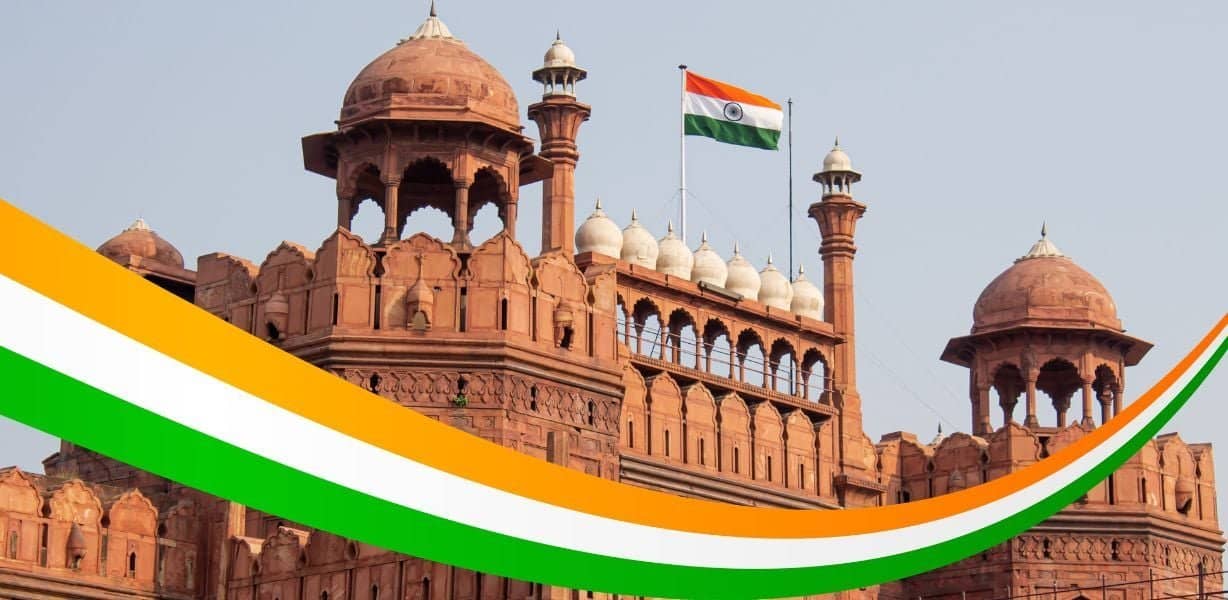
India celebrates Independence Day amidst calls for unity and caution in challenging times (Representative Image)
Key Takeaways
1 of 3
Automatically generated. Read full article for complete context.
As India observes Independence Day on 15 August, three aspects of the present day situation are particularly important for its people and leadership in the government as well as the opposition. Firstly, there should be a clear understanding on all sides that these are exceptionally difficult times in terms of the wider world situation. One hopes it will improve soon, but based on available facts, it appears more likely to deteriorate further. Secondly, and related to the first point, there is need for a lot of caution and for extra care in making the right choices. This is true not only for the government but also for the opposition parties and social movements, if the interests of the country and its people are to be protected. Thirdly, and related to the second, there is need for greater unity and for avoiding too much internal confrontation.
While of course opposition political parties and social movements should continue to play the very important roles expected of them in a democracy, it will be helpful if excessive confrontational attitude is avoided and all the three sides of the democracy display more willingness and capacity to also explore ways of working together on at least some issues so that common interests of security and welfare of people can be protected.
Although this is being discussed here more in the context of India, in fact this is true for most countries in the world today that these difficult times need more unity and caution. Any wrong decisions or choices, or excessive internal confrontation, may prove to be much more costly than in normal times. What is more, as this need is realized by thoughtful people, India’s experience will be watched with particular interest, as nearly one-sixth of the world’s population lives there. Hence there can be more space for thoughtful people of India and other countries to together and with unity find their way out of difficult situations. They can all bring their creativity and strengths to finding solutions that can be helpful for all.
India can contribute in three particularly helpful ways. With its huge numbers of small farmers and landless rural people, India can evolve a model of combining strengthening of rural livelihoods with encouraging climate response which has a wider relevance. Secondly, India can help to take forward the legacy of Mahatma Gandhi by evolving a model of how non-violence in daily life can help to create a strong base for peace with justice. Thirdly, with all the recent emphasis on educational reform here, India can widen this to evolve a value based educational system integrated with creating a society based on peace, justice and protection of environment.
The Independence Day is also a good time for remembering the highly inspirational freedom struggle as not just India, but the entire world, can still learn so much from it. There are so many persons of great courage and wisdom here but still if we have to select six among them who had the most inspirational impact, then many people would select Mahatma Gandhi, Shahid Bhagat SinghBhagat SinghAn influential Indian socialist revolutionary who was executed by the British colonial government at the age of 23, becoming a folk hero of the Indian independence movement. ‘Shahid’ means martyr. (the great revolutionary who was hanged at the age of only 23 by colonial rulers but is still an inspiration for millions), Jhansi Ki Rani LakshmibaiRani Lakshmibai of JhansiThe queen of the princely state of Jhansi, a prominent figure in the Indian Rebellion of 1857, known for her fierce resistance against British colonial rule. ‘Rani’ means queen. (the queen who died fighting the colonial rulers in 1858), Badshah KhanAbdul Ghaffar KhanA Pashtun independence activist and spiritual leader, also known as ‘Frontier Gandhi,’ who advocated for non-violence and worked to end British rule in India., Jawaharlal Nehru and Subhash Chandra Bose.
Now these six freedom fighters are very different individuals in several contexts but two very important aspects are common to all six of them. First of all, in their struggle against imperialism and in other aspects of their lives, they believed in the unity of all people, based on their equality regardless of their religion, caste and other such identities. Secondly, they were particularly keen to reach out to neglected poor communities, and to be more concerned about justice for them. It is a matter of great hope for India that those who are most widely regarded as inspirational freedom movement leaders were united by these important aspects of their thinking and work.
While there is a lot of debate on India’s policy choices, the essence of India’s desirable policy framework is very clear. India should adopt a path based on justice and equality, peace and non-violence, protection of environment and all forms of life. Further this should be integrated with the most important needs of the world, particularly that for protecting life and life-nurturing conditions of the planet and, more immediately, ensuring better response to the most pressing humanitarian crisis situations. Most of this is true for all times, but we also need to look at other, more timely concerns.
India has between 17-18 percent of the world’s population but just about 3 per cent of the world’s land area, about 4 per cent of the world’s freshwater resources and less than one percent of the world’s known crude oil and natural gas stocks. This should illustrate the caution India must exercise in its policy framework even in normal times. In times of increasing wars and conflicts globally, economic and trade disruptions, arbitrary decisions by the most powerful countries and the resulting trust deficit, the need for caution increases further.
We cannot forget how many countries like Iraq, Afghanistan, Libya, Syria and others have been heavily destroyed, how Iran-Iraq war was instigated, how a more recent attack on Iran was preceded by significant efforts to divide the country. In recent history the greatest distress and risks have been experienced by those countries that were pushed towards civil wars, or proxy wars, or became victims of regime change operations. So we should be cautious and protect our unity, so that outside forces have fewer chances of harming us. The more united we remain on the basis of justice and equality of all, the fewer the chances that outside forces will be able to weaken us. Hence I have been pleading for some time that in vulnerable developing countries like India, the relations between ruling and opposition parties in competitive democracies should not become too strained and hostile. While competitive democracy is essential, care must be taken to prevent hostilities and polarization from escalating to an extent that hinders united action on urgent national concerns.
The ruling party and its alliance partners, the opposition parties and social movements should all take steps to ensure that confrontation does not spill out of control and opportunities of cooperation continue to remain in the wider national interests and the interests of people. Nothing will be gained by the various sides making highly exaggerated criticisms or or even insulting remarks. Conversely, much can be gained by cooperation and unity for important tasks and challenges. Highly respected persons from various walks of life can organize meetings and get-togethers where government representatives and opposition leaders have more opportunities for interactions in more relaxed and friendly conditions.
It will be particularly useful to resolve some of the more controversial and divisive issues through accommodative approaches that involve more consultation. A very recent example is the intense discussion surrounding the FCRA (Foreign Contributions Regulation Amendment) Bill, 2026 (Foreign Contributions Regulation Amendment) Bill, 2026, particularly its asset vesting aspects, leading to its referral to a Joint Parliamentary Committee, as per latest indications at the time of writing, with the hope that its more objectionable aspects will be removed., as per latest indications at the time of writing, with a high hope that at least the more objectionable aspects will be removed. On matters of foreign policy there can be a consensus that India will not join the US or the China camp but will seek friendly relations with all countries while remaining determined not to sacrifice its core interests or sovereignty. India should seek to strengthen the voice of all those countries which have similar concerns, exploring more unity and cooperation, emerging in a leadership role. This strength should be used to become a voice for justice and peace at world level, and also for climate and environment concerns as well as for improving/increasing humanitarian aid.
Disclaimer:The views and opinions expressed in this article are those of the author(s) and do not necessarily reflect the official policy or position of The Rift.