Opening The Rift
therift
© 2026 The Rift. All Rights Reserved.
A Judge Who Counts Trees and Rights With Equal Seriousness: Justice Sanjeev Sachdeva Joins the Supreme Court
Exploring the legacy of Justice Sanjeev Sachdeva, from environmental oversight to institutional accountability, as he steps into his new role at the Supreme Court.

Key Takeaways
1 of 3
Automatically generated. Read full article for complete context.
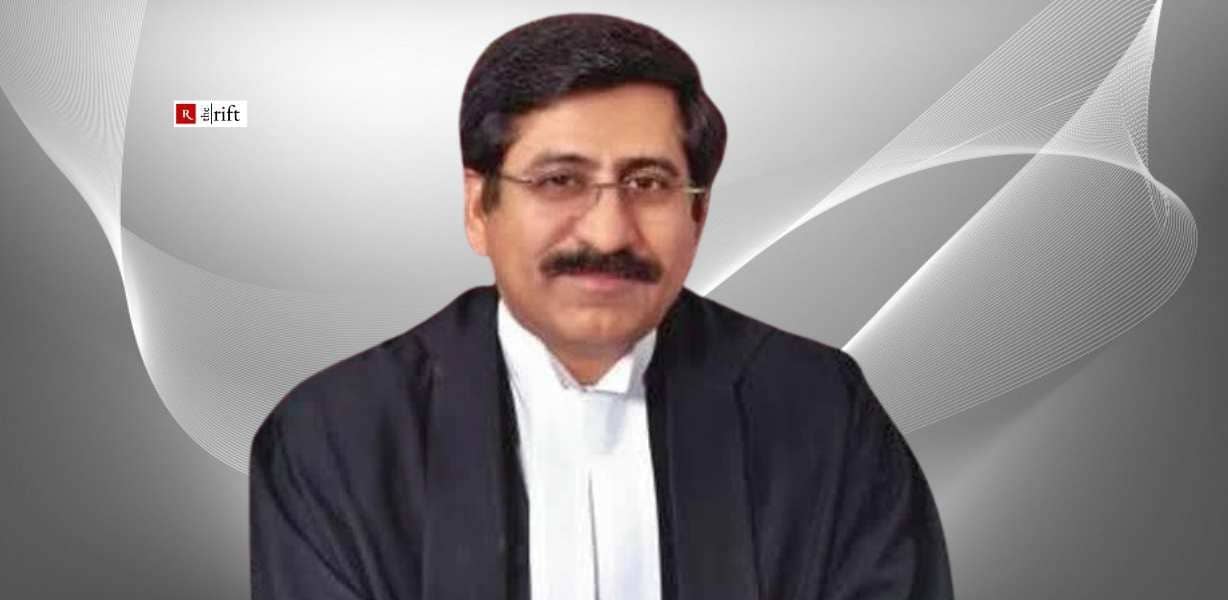
On June 2, 2026, Justice Sanjeev Sachdeva took oath as a Judge of the Supreme Court of India. His elevation, recommended by the Supreme Court CollegiumCollegium SystemThe system by which the Chief Justice of India and a forum of the four senior-most judges of the Supreme Court recommend appointments and transfers of judges. alongside four others, was unremarkable in its process: the Collegium recommends, the government notifies, the oath is administered. What is worth pausing over is the body of work that preceded it.
Justice Sachdeva brings to the Supreme Court nearly four decades of legal experience, first as an advocate, then as a judge of the Delhi High Court, and most recently as Chief Justice of the Madhya Pradesh High Court. His tenure at the Bench, particularly during his time in Bhopal, produced a pattern of judicial engagement that is worth examining as he assumes a seat on the country’s highest court.
From Commerce to the Bar
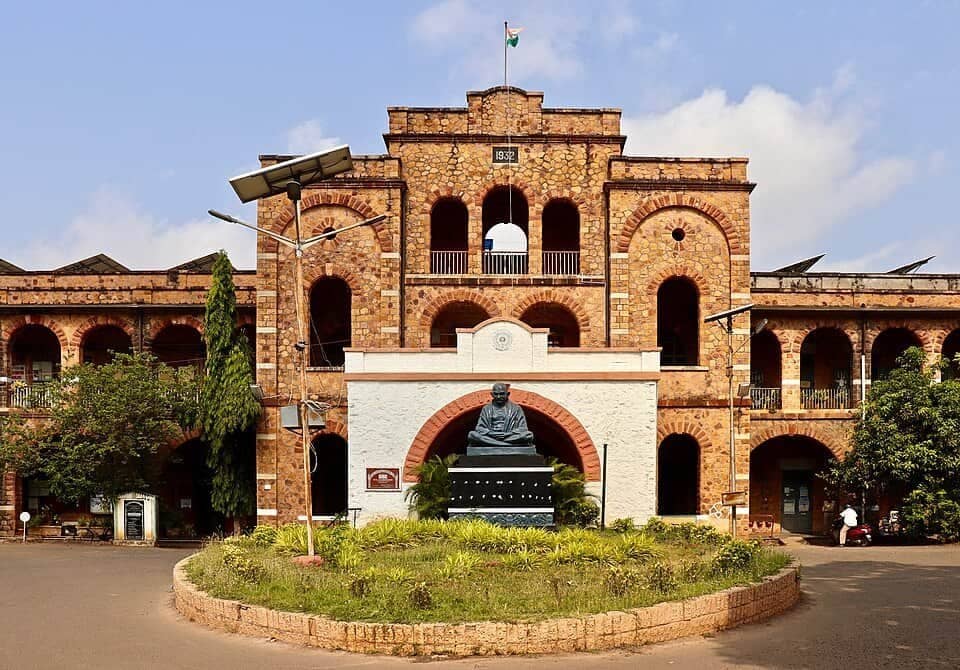
Justice Sachdeva was born in Delhi on December 26, 1964. His academic trajectory was not the conventional route through humanities that leads many to law. He studied commerce at Sri Ram College of Commerce, University of Delhi one of the country’s most competitive institutions before turning to law at the Campus Law Centre, where he secured a position on the merit list upon graduating in 1988.
He enrolled as an advocate with the Bar Council of Delhi on August 1, 1988, and built his practice across the Supreme Court, the Delhi High Court, and district courts. In 1992, he was selected as one of five young Indian lawyers to participate in the Commonwealth Young Lawyers Course at the University of London on a British Council Scholarship, an early indication of the international exposure and advocacy training orientation that would later define aspects of his judicial career. He subsequently served as a lead trainer in the Indo-British Advocacy Skills Project, training lawyers across multiple High Courts in examination and cross-examination techniques.
By 1995, he had secured second position in the Advocate-on-RecordAdvocate-on-RecordA lawyer who has cleared a specialized exam and is exclusively entitled to file cases directly in the Supreme Court of India. examination of the Supreme Court. He served as Standing Counsel for the Bar Council of India for over two decades, and as Senior Panel Lawyer for the Union of India for over a decade. He was designated as Senior Advocate by the Delhi High Court on July 28, 2011, and elevated as Additional Judge of that court on April 17, 2013, confirmed as Permanent Judge in March 2015.
Career Trajectory: Justice Sanjeev Sachdeva
⚖1988 & 1995
ADVOCACY
Enrolls with Bar Council (1988); becomes Supreme Court Advocate-on-Record (1995).
🏛2013
DELHI HC
Elevated as Additional Judge of the Delhi High Court.
⬈2024 & 2025
M.P. HC
Transferred (2024); appointed Chief Justice (2025).
⚖2026
SUPREME COURT
Takes oath as Judge of the Supreme Court of India.
VISUALS BY THE RIFT
A Transfer and a Pattern That Emerged in Madhya Pradesh
Justice Sachdeva was transferred to the Madhya Pradesh High Court in May 2024, where he served as Acting Chief Justice before being formally appointed Chief Justice with effect from July 14, 2025. It is in Madhya Pradesh that his judicial character comes most clearly into view — and where his record deserves the closest reading by those who will appear before him at the Supreme Court.
The pattern that emerges from his tenure in Bhopal is that of a judge alert to institutional failures, comfortable with suo motuSuo MotuA Latin term meaning ‘on its own motion’, used when a court takes up a case on its own without a formal petition being filed. action, and willing to use the court’s supervisory jurisdiction as a genuine instrument of accountability rather than as a formal gesture.
The Environmental Thread
The most sustained thread running through Justice Sachdeva’s tenure as Chief Justice is environmental specifically, the illegal felling of 488 trees near Bhopal.
What began as a suo motu case based on reported illegal tree cutting became, over successive hearings, a detailed exercise in judicial oversight of the state’s environmental governance. The court did not merely issue a show cause notice and wait. It directed the Public Works Department to file affidavits, demanded GPS-tagged photographs of allegedly transplanted trees, found the photographs inadequate, extended the restriction on tree cutting from Bhopal to the entire state of Madhya Pradesh, and required the State to justify each step of its compensatory plantation drive.
When the State submitted photographs of the 253 trees it claimed to have transplanted, the court noted that the photographs showed trees that appeared to have been cut rather than transplanted, and directed the State to file photographs along with GPS coordinates of each tree. This is not grand judicial pronouncement — it is painstaking, granular accountability work. It is the kind of oversight that actually changes administrative behaviour, because it makes evasion difficult.
In a parallel matter involving national highway widening through a tiger corridor, Justice Sachdeva’s bench directed the National Tiger Conservation Authority and the National Board for Wildlife to assist the court and explain how the proposed landscape management plan would ensure that wildlife passage was not disturbed. Again, the court did not simply accept official assurances. It insisted on technical engagement.
Access, Inclusion, and the Courts as Institutions
Justice Sachdeva also demonstrated a consistent interest in the court as a physical and institutional space — whether it was adequately accessible, and whether it genuinely served all who came before it.
In a writ petition by an advocate seeking amenities for specially-abled persons to access court premises, his bench directed the Registrar General to file an audit report on facilities available for women, persons with disability, persons suffering from chronic illness, and senior citizens, not only at the High Court but across all district courts and tehsil court buildings in Madhya Pradesh. This is the kind of systemic direction that translates individual petitions into structural reform.
His bench also confronted the question of women’s representation within the Bar, halting elections to the Rewa Bar Association when it found that mandatory thirty percent reservation for women had not been complied with. The court’s intervention was brief but pointed: internal democratic processes within professional bodies are not exempt from constitutional obligations.
The Question of Livestreaming
One of Justice Sachdeva’s more commented-upon decisions was the temporary suspension of livestreaming of court proceedings in criminal matters before the Madhya Pradesh High Court, in response to concerns about alleged misuse of court footage to create social media reels and memes.
This decision drew criticism, given the Supreme Court’s own emphasis on livestreaming as a tool of transparency and public access to justice. The tension it reveals is real: livestreaming serves transparency, but unregulated dissemination of court footage particularly in criminal proceedings involving victims and the accused raises legitimate concerns about dignity, privacy, and the risk of reducing proceedings to entertainment.
How Justice Sachdeva navigates this tension at the Supreme Court level, where the stakes and the public interest in transparency are both considerably higher, will be worth watching.
The Human Dimensions
Among the cases that best illustrate Justice Sachdeva’s judicial temperament is one involving an eighteen-year-old girl who had left home to pursue civil services aspirations. In a habeas corpusHabeas CorpusA writ requiring a person under arrest to be brought before a judge or into court, especially to secure the person’s release unless lawful grounds are shown for their detention. petition filed by her father, the court chose a path less obvious than simple dismissal: it recognised her right to pursue her ambitions and facilitated a supportive environment by involving a senior IAS officer as her mentor. Legal technicalities did not obscure the human reality, and the court responded with imagination rather than formula.
In a contempt matter where a semi-literate respondent had misbehaved before a subordinate court, Justice Sachdeva’s bench accepted his unconditional apology and directed him to plant fifty indigenous trees under official supervision, rather than imposing a fine or imprisonment. The response matched the person, not just the offence.
At the Delhi High Court, his record includes significant rulings holding that a taxpayer’s GST registration cannot be cancelled retrospectively merely because returns were not filed for some period, and that a CRPF constable with seventeen years of exemplary service had no obligation to disclose offences committed as a juvenile when seeking employment. These are not constitutional landmarks. They are decisions that affect real people in specific ways, and they reflect a judge who applies the law with attention to consequences.
What to Expect
Justice Sachdeva is scheduled to serve until December 25, 2029, a tenure of approximately three and a half years. That is a meaningful period in the life of the Supreme Court, as it continues to grapple with environmental law, administrative accountability, access to justice, and the rights of marginalised litigants.
His background as a government counsel, Standing Counsel for the Bar Council of India, Senior Panel Lawyer for the Union of India means he understands the institutional perspective of the State. His record as Chief Justice in Madhya Pradesh suggests he has not confused that understanding with deference to it.
The Supreme Court receives many judges. Not all of them arrive with a demonstrable track record of using their courts as instruments of genuine oversight. Justice Sachdeva does. What he makes of a seat on the highest bench remains to be seen, but the foundation is worth noting.
Disclaimer:The views and opinions expressed in this article are those of the author(s) and do not necessarily reflect the official policy or position of The Rift.
*Justice Sanjeev SachdevaIndian JudiciaryJustice Sanjeev SachdevaLegal AccountabilitySupreme Court of India