Opening The Rift
therift
© 2026 The Rift. All Rights Reserved.
State-Level Conference Demands Proper Implementation of PESA and Forest Rights Act
Odisha’s tribal communities face displacement and their constitutional rights are undermined as the state delays PESA rules and slows Forest Rights Act implementation.

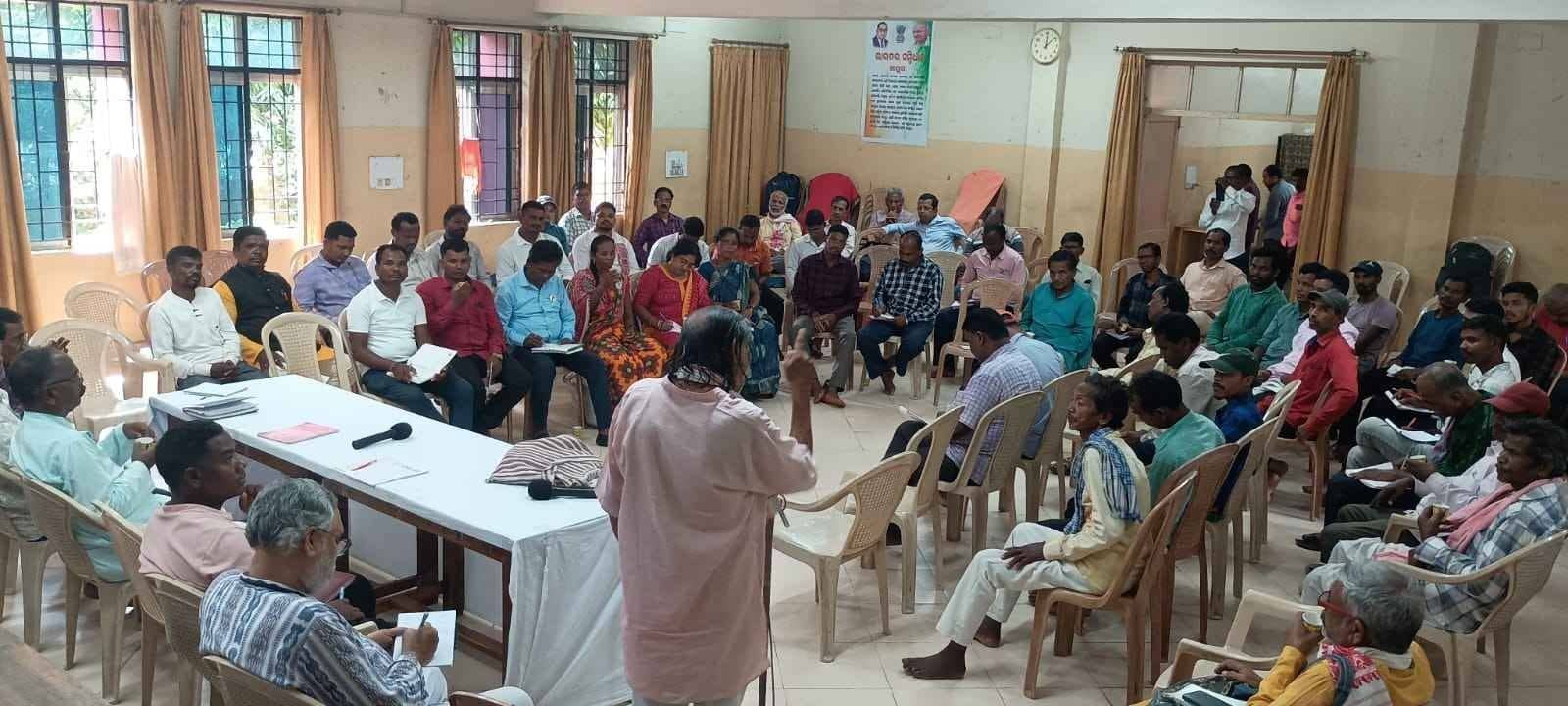
Participants at a state-level conference demand the proper implementation of the PESA and Forest Rights Act.
Key Takeaways
1 of 3
Automatically generated. Read full article for complete context.
Bhubaneswar, Odisha: A two-day state-level conference was inaugurated on October 7, organized by the Campaign for Survival with Dignity (CSD), Odisha, in collaboration with various people’s organizations.
The conference was convened to demand an end to the undue delay in framing the rules under the Panchayats (Extension to Scheduled Areas) Act (PESA) and to call for the proper and effective implementation of the Forest Rights Act, 2006.
Representatives of various tribal communities, along with activists and leaders of the forest rights movement, participated in the conference.
PESA Rules in Odisha: Concerns Over Delay
Gopinath Majhi, State Convener of CSD, delivered the welcome address, while noted environmentalist and State President of the Lok Shakti Abhiyan, Prafulla Samantara, delivered the inaugural address.
The first session was chaired by a presidium comprising Biranchi Bariha, Bhishma Pangi, Arun Dihudi, Dr Shricharan Behera, Sandeep Pattnaik and others. The session was coordinated by Advocate Narendra Mohanty, a member of the convening committee.
During the first session, participants pointed out that, with the exception of Odisha, the governments of other states having Scheduled Areas have already framed rules to implement the Panchayats (Extension to Scheduled Areas) Act, 1996 (PESA).
The participants emphasized that PESA provides an important framework for strengthening the role of tribal communities in Scheduled Areas in matters concerning their development, protection and management of community and natural resources, rights over land, self-governance, decision-making, planning and supervision of development activities.
PESA and Tribal Self-Governance
Speakers at the conference emphasized that PESA is distinct from other legislation because it is rooted in the constitutional framework governing Scheduled Areas.
The Act seeks to establish a system of self-governance in Scheduled Areas and devolve powers to tribal communities, enabling them to play a central role in decision-making and local governance.
According to participants, Odisha has been delaying the framing of rules required for implementing PESA. They expressed concern that, despite assurances since 2023, the state government has yet to complete the process.
Tribal Communities and the Impact of Development Projects
The conference also discussed the situation of tribal communities living in Scheduled Areas, which account for 44.7% of Odisha’s total geographical area.
Participants alleged that tribal communities are increasingly being affected by projects and policies pursued in the name of development, which they said often serve the interests of large capital and corporate entities.
Speakers further alleged that the constitutional and legal rights of tribal communities and Gram Sabhas in Scheduled Areas are being undermined by the government machinery.
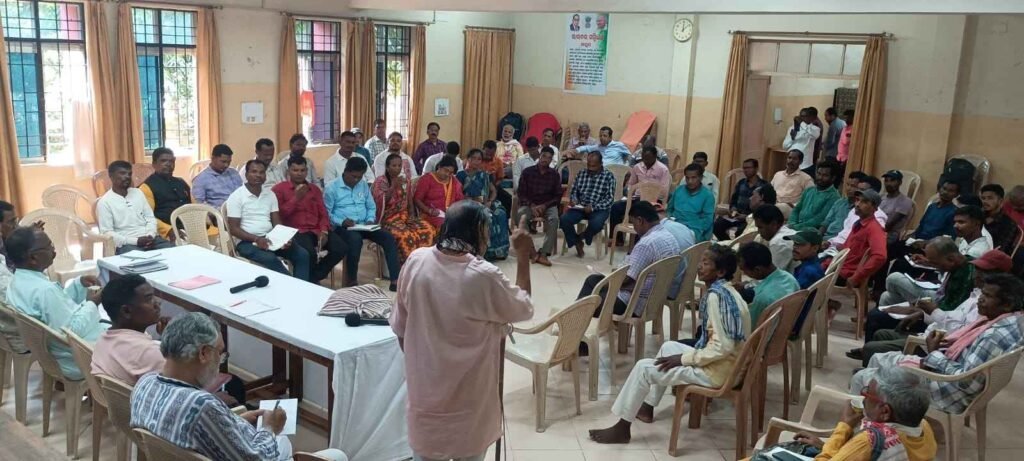
They expressed concern that the special constitutional provisions relating to self-governance in Scheduled Areas are consequently losing their practical significance.
Growing Concerns Over Land, Forests and Livelihoods
Participants said that instead of ensuring constitutional protection and development for Scheduled Tribes dependent on natural resources, many communities continue to face displacement, poverty and alleged instances of oppression.
They also expressed concern over growing insecurity surrounding tribal communities’ rights over their land, forests and natural resources, as well as their traditional livelihoods.
Concerns Over Mining and Natural Resources
The conference also raised concerns over the auction of mines and mineral resources in Odisha.
Participants expressed apprehension that the PESA rules could ultimately be introduced only as a formality after major mining and resource-allocation decisions have already been made. They feared that such an approach could weaken the role of Gram Sabhas and tribal communities in decisions concerning natural resources.
Forest Rights Act, 2006: Call for Effective Implementation
The conference also focused extensively on the implementation of the Forest Rights Act, 2006.
Participants alleged that following the formation of the new government in Odisha in 2024, the implementation of the Forest Rights Act has either been neglected or slowed down considerably.
The Forest Rights Act is regarded by participants as a historic piece of legislation that recognizes the rights of tribal and other traditional forest-dwelling communities over forest resources.
The Act also provides for the protection and conservation of natural resources and recognizes the role of Gram Sabhas in the management of community forest resources and in securing the livelihoods and food security of forest-dependent communities.
Allegations of Attempts to Weaken Forest Rights
Tribal representatives, forest rights activists and movement leaders alleged that systematic efforts are being made to weaken or take away rights that have been recognized under the Forest Rights Act.
They stressed the need for effective implementation of the Act and for strengthening the role of Gram Sabhas in the protection, conservation and management of forest resources.
Tribal Representatives Felicitated
Representatives of various tribal communities—including Gopinath Gadaba, Debadayalu Pradhan, Mukul Madkami, Ramamurti Krisani, Nanu Sabar, Gupta Jani, Jagamohan Sikaddar, Narendra Pingua, Pratap Marandi, Lalmohan Murmu, Gangadhar Purty, Jamdar Chatar, Prem Sagar Dhurua, Padmalochan Buduha, Kailash Sundramajhi, Shankar Sabar, Raju Sabar, Tuna Malik, Ishwar Pangi, Gregory Minj, Narahari Juang, Suka Kabasi, Sukadev Madiami, Pradeep Kanhara, Babaji Charan Behera, Raju Khilo, Debaraj Majhi, Pratima Kadrika and Reena Pradhan—were felicitated with traditional shawls.
Discussions During the Second Session
Gaurang Mahapatra, Bijay Swain and Balabhadra Malik also participated in the discussions during the second session.
The speakers discussed issues concerning the rights of tribal communities and forest dwellers and the need to strengthen ongoing efforts for the implementation of PESA and the Forest Rights Act.
Support from Human Rights and Social Activists
Expressing solidarity with the conference, Professor Swadhin Pattnaik, human rights activist Bishwapriya Kanungo, Debaprasad Ray, Prasanta Paikaray, Professor Sumitra Patel, Prakash Samantsinghar, Adv. Shankar Pani, Arabinda Murti and Kalyan Anand, among others, participated in the discussions.
They expressed support for those engaged in struggles over rights to water, land and forests and encouraged activists and community representatives involved in these efforts.
Action Programme to Be Finalized
The organizers announced that the programme of action for the movement demanding the effective implementation of PESA and the Forest Rights Act would be finalized on October 8.
The conference is scheduled to conclude after the action programme is finalized.
Disclaimer:The views and opinions expressed in this article are those of the author(s) and do not necessarily reflect the official policy or position of The Rift.